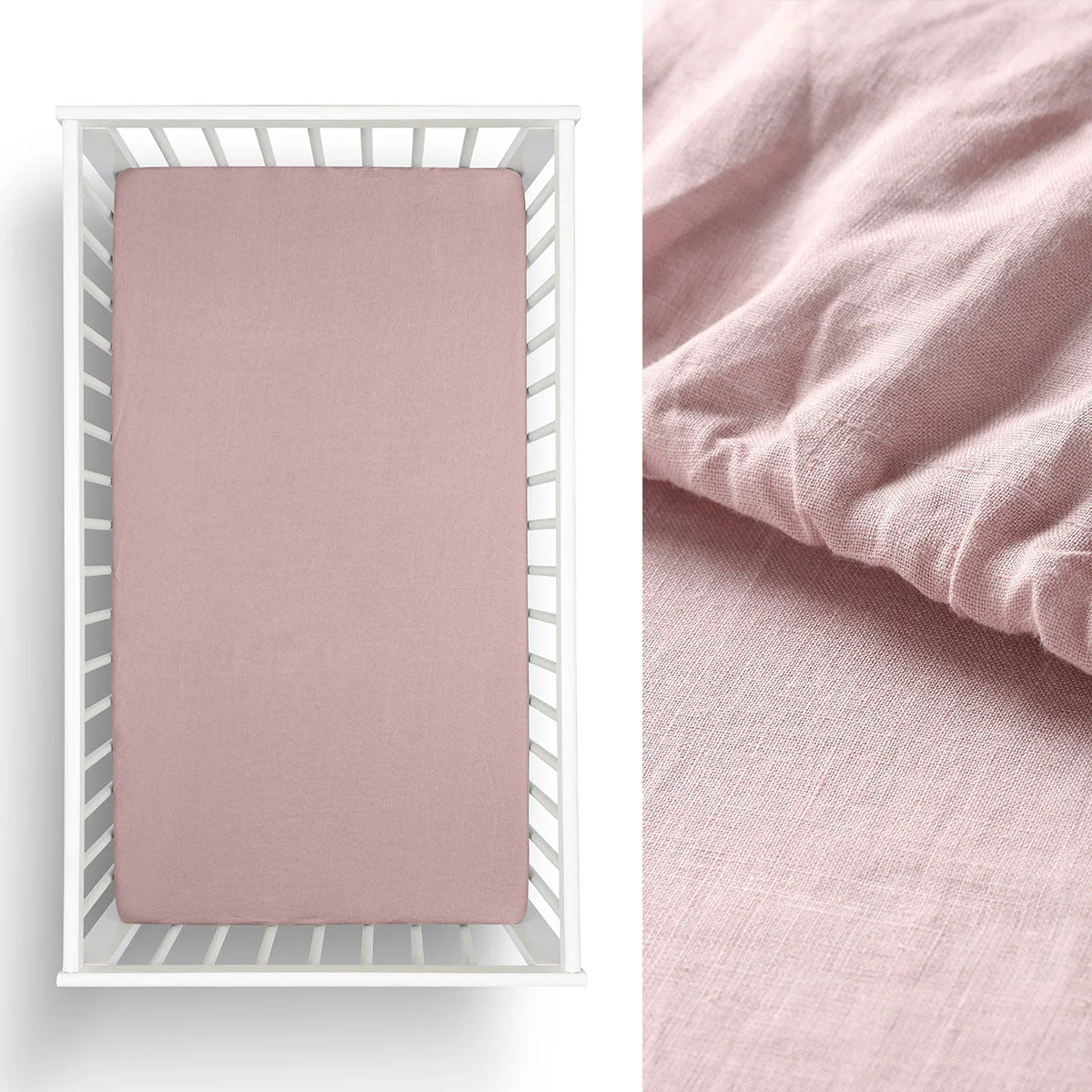
Little Gem | Hemp Fitted Cot Sheet | Cot | Pale Mauve
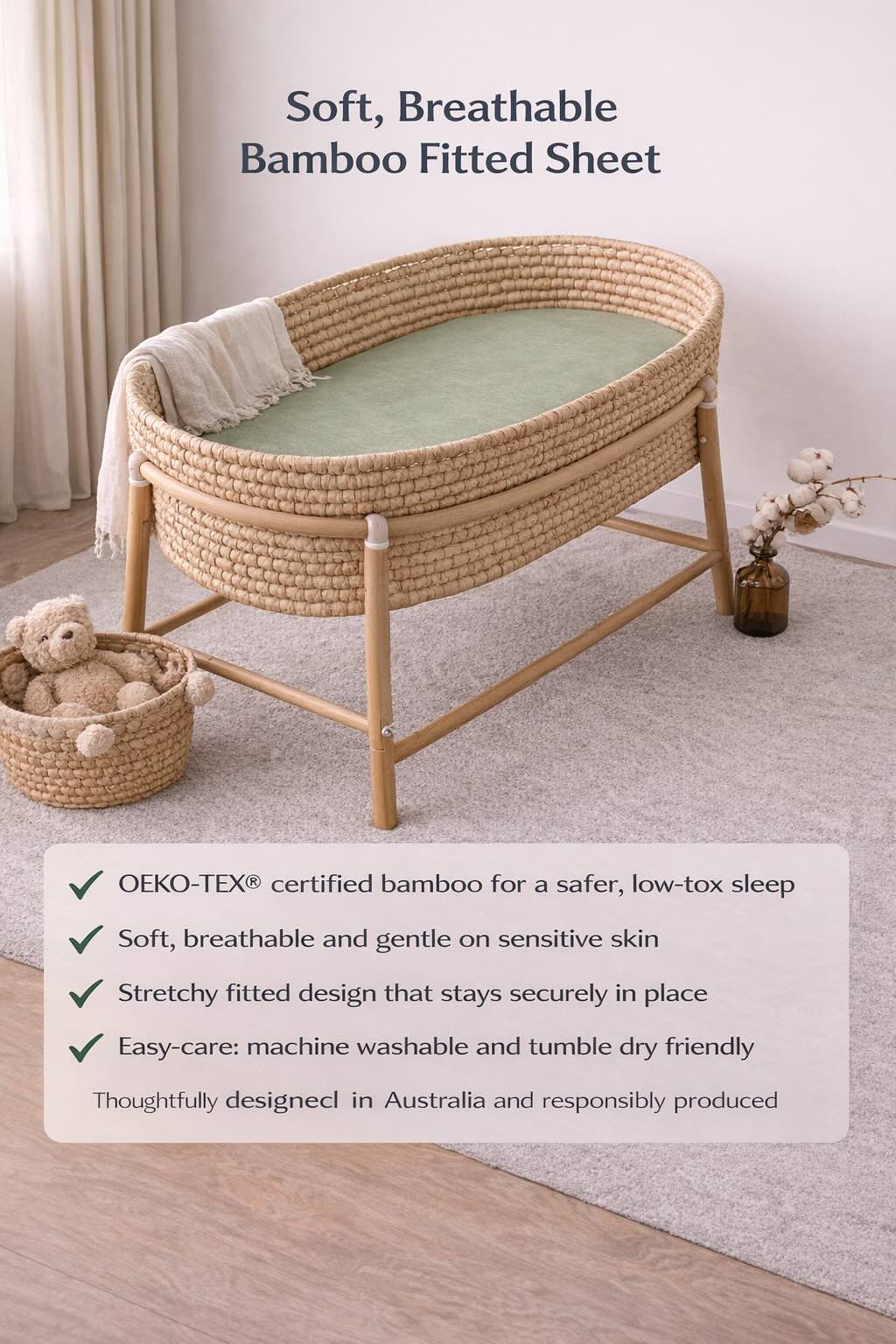
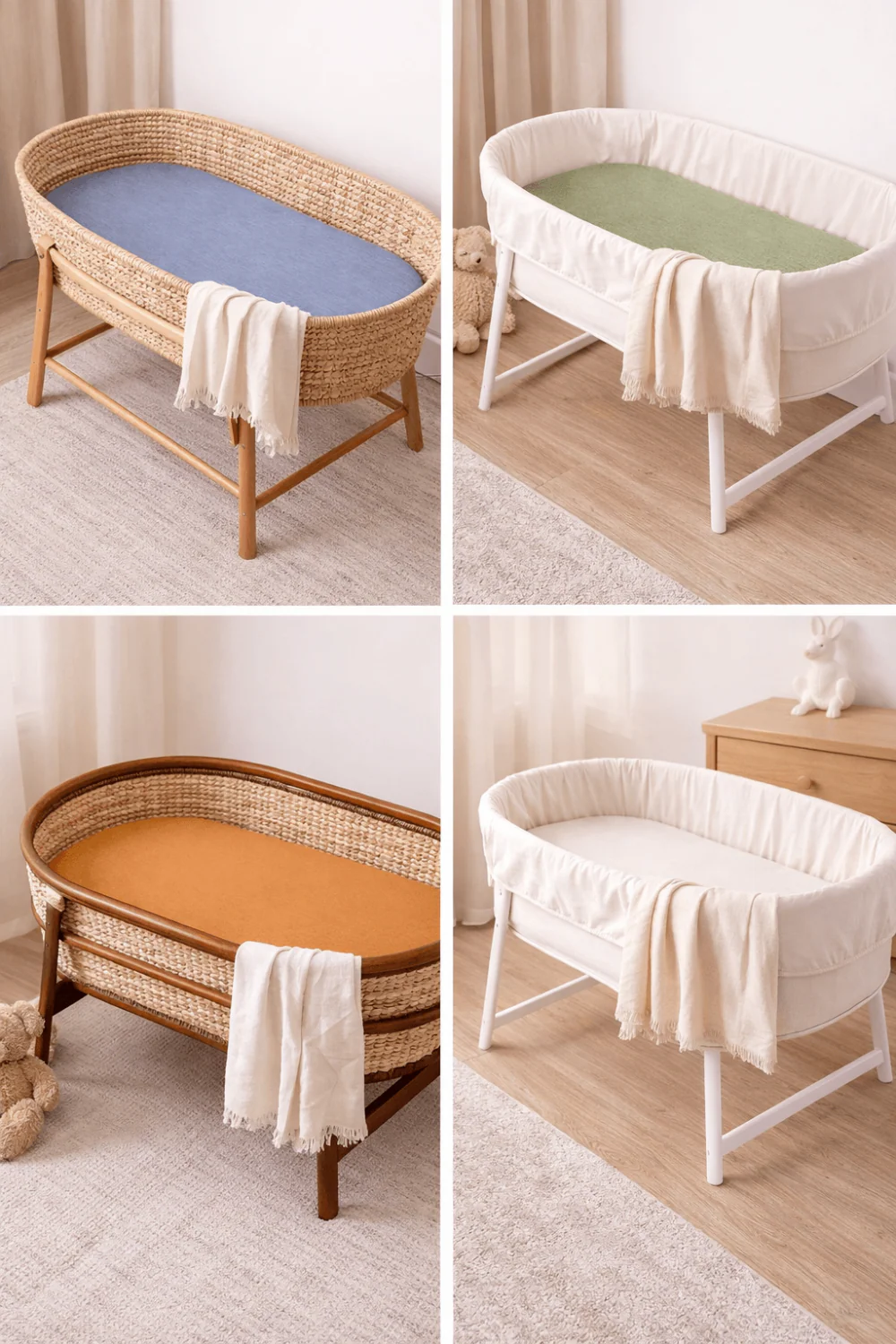
A fitted cot sheet made from 100% hemp, in pale mauve, by Little Gem. Sized 77 × 135cm with a 20cm depth to fit a standard Australian cot mattress. Measure your mattress before purchase — Australian cots vary, and a fitted sheet works best with a snug, well-fitting mattress.
Why hemp for a cot sheet?
Hemp is one of the most-studied natural plant fibres in textile research, and the properties documented in peer-reviewed studies suit it well to bedding for babies and young children.
- Hollow, porous fibre structure. Hemp fibres have a hollow morphology that absorbs moisture readily and releases it again as the surrounding air dries. This is part of why hemp is described as breathable and quick-drying compared with many synthetic textiles (Royal Society of Chemistry, 2021).
- Naturally occurring antibacterial compounds. Peer-reviewed research has identified phenolic acids, lignin components and other bioactive compounds in raw hemp fibre that demonstrate antibacterial activity against common bacteria including Staphylococcus aureus and Escherichia coli under laboratory conditions (Khan et al., 2014, BioResources; PMC8539042, 2021). This isn't a substitute for washing — hemp fabric still needs regular hot-washing in a bedroom hygiene routine — but it's part of why hemp tends to retain odours less than synthetic blends.
- Moisture management. Hemp absorbs moisture quickly and releases it again, which helps the sleeping surface stay dry on warm or humid nights. This matters for dust mite management — mites thrive in humid microclimates, so fabric that doesn't trap moisture contributes to a drier bedding environment.
- Softens with washing. Like all hemp fabrics, the sheet continues to soften with washing and use.
- Hypoallergenic. Little Gem markets these sheets as hypoallergenic. See the FAQ below for what "hypoallergenic" means (and doesn't mean) in Australia.
- Low-input cultivation. Hemp grows with low fertiliser and pesticide requirements compared to conventional cotton, which is part of its appeal as an environmental textile fibre.
- Single-fibre construction. 100% hemp, no polyester or other synthetic blends.
Features
- 100% hemp fabric
- Fitted cot sheet with elasticated edges
- Pale mauve, solid colour
- Manufactured by Little Gem
Care
- Machine washable
- Washing at 55°C or hotter kills dust mites (McDonald & Tovey, 1992, Journal of Allergy and Clinical Immunology); cold-washing still removes most allergen if hot isn't possible
- See product label for detailed care instructions before first use
For families managing dust mite sensitivity
A fitted sheet sits over the mattress and is washed regularly — but the most effective allergen barrier in a bedroom isn't the sheet itself; it's what sits underneath. Published research consistently finds that comprehensive bedroom control outperforms any single intervention (van Boven et al., 2024, World Allergy Organization Journal).
A typical layered setup for a child's cot:
- Allergen-impermeable mattress encasement — sits directly on the mattress as the primary allergen barrier
- This hemp fitted sheet over the top — soft, breathable contact layer
- Allergen-impermeable quilt cover if a quilt is in use (consult Red Nose Australia and your healthcare provider on safe-sleep age guidance)
- Hot-wash detergent for sheets and bedding at 55°C or above
- Bedroom humidity control — keeping bedroom humidity below ~50% makes the environment harder for dust mites
For advice specific to your child's situation, speak with your GP, paediatrician, or maternal and child health nurse.
Frequently asked
What does "hypoallergenic" mean for a cot sheet in Australia?
"Hypoallergenic" is a marketing term used by textile manufacturers — it isn't a regulated standard in Australia. There's no Australian government definition of what makes a fabric hypoallergenic, and no required testing protocol behind the term. Different manufacturers use it differently. Little Gem describes these sheets as hypoallergenic on the basis that hemp is a single-fibre, low-processed natural textile with no synthetic content. We pass through the term when a manufacturer describes their product that way, but we'd encourage you to read it as the manufacturer's product descriptor rather than a regulated standard.
Is hemp fabric really antibacterial, or is that marketing?
Peer-reviewed research has documented antibacterial activity in raw hemp fibre against common bacteria including Staphylococcus aureus and Escherichia coli under laboratory conditions (Khan et al., 2014, BioResources). The activity comes from naturally occurring compounds in the fibre — phenolic acids, lignin components, and other bioactives — rather than a chemical treatment applied afterward. That said, "antibacterial" doesn't mean sterile, doesn't replace washing, and doesn't make the sheet a medical textile. It does mean hemp tends to retain odours less than synthetic blends, and the activity persists through washing.
Is hemp scratchy?
Raw hemp fibre can feel coarse, but hemp used for bedding is processed for softness, and hemp is one of the few textile fibres that continues to soften with washing and use over its lifespan.
How does hemp compare to bamboo for cot bedding?
Both are breathable natural-fibre options often chosen by families managing sensitive skin. Bamboo (as used in bedding) is typically rayon-from-bamboo — a regenerated fibre that's very soft from new but is chemically transformed during manufacture. Hemp is closer to a long-fibre cellulose like linen — more durable, and processed mechanically rather than chemically. Hemp also has documented intrinsic antibacterial properties; bamboo's antibacterial claims are more contested because the rayon-from-bamboo manufacturing process can alter the original fibre's natural compounds.
Will it shrink?
Hemp can shrink slightly on first wash, particularly at higher temperatures. The sheet is sized to fit a standard Australian cot mattress (77 × 135 × 20cm). Follow the care label and consider washing before first use.
Why do families with sensitive skin sometimes choose hemp?
We don't make safety claims for specific medical conditions. Hemp is a single-fibre, low-processed natural textile, which families managing sensitive skin often prefer over synthetic or chemically-treated blends. Every child is different — for advice specific to your child's situation, talk to your GP, paediatrician, or dermatologist.
Can I tumble dry it?
See the product care label for definitive guidance. Hemp generally responds well to line-drying and may stiffen if tumble-dried on high heat. If you do tumble-dry, low heat is safer for the fabric's longevity.
When should my baby start using a fitted sheet?
Red Nose Australia provides Australian safe-sleep guidance for infants. A fitted sheet over a firm, well-fitting mattress is appropriate from birth; loose bedding (additional sheets, blankets, quilts) is a separate question with age-specific guidance from Red Nose and your healthcare provider.
General educational content. Not medical advice.
Little Gem | Hemp Fitted Cot Sheet | Cot | Pale Mauve
A fitted cot sheet made from 100% hemp, in pale mauve, by Little Gem. Sized 77 × 135cm with a 20cm depth to fit a standard Australian cot mattress. Measure your mattress before purchase — Australian cots vary, and a fitted sheet works best with a snug, well-fitting mattress.
Why hemp for a cot sheet?
Hemp is one of the most-studied natural plant fibres in textile research, and the properties documented in peer-reviewed studies suit it well to bedding for babies and young children.
- Hollow, porous fibre structure. Hemp fibres have a hollow morphology that absorbs moisture readily and releases it again as the surrounding air dries. This is part of why hemp is described as breathable and quick-drying compared with many synthetic textiles (Royal Society of Chemistry, 2021).
- Naturally occurring antibacterial compounds. Peer-reviewed research has identified phenolic acids, lignin components and other bioactive compounds in raw hemp fibre that demonstrate antibacterial activity against common bacteria including Staphylococcus aureus and Escherichia coli under laboratory conditions (Khan et al., 2014, BioResources; PMC8539042, 2021). This isn't a substitute for washing — hemp fabric still needs regular hot-washing in a bedroom hygiene routine — but it's part of why hemp tends to retain odours less than synthetic blends.
- Moisture management. Hemp absorbs moisture quickly and releases it again, which helps the sleeping surface stay dry on warm or humid nights. This matters for dust mite management — mites thrive in humid microclimates, so fabric that doesn't trap moisture contributes to a drier bedding environment.
- Softens with washing. Like all hemp fabrics, the sheet continues to soften with washing and use.
- Hypoallergenic. Little Gem markets these sheets as hypoallergenic. See the FAQ below for what "hypoallergenic" means (and doesn't mean) in Australia.
- Low-input cultivation. Hemp grows with low fertiliser and pesticide requirements compared to conventional cotton, which is part of its appeal as an environmental textile fibre.
- Single-fibre construction. 100% hemp, no polyester or other synthetic blends.
Features
- 100% hemp fabric
- Fitted cot sheet with elasticated edges
- Pale mauve, solid colour
- Manufactured by Little Gem
Care
- Machine washable
- Washing at 55°C or hotter kills dust mites (McDonald & Tovey, 1992, Journal of Allergy and Clinical Immunology); cold-washing still removes most allergen if hot isn't possible
- See product label for detailed care instructions before first use
For families managing dust mite sensitivity
A fitted sheet sits over the mattress and is washed regularly — but the most effective allergen barrier in a bedroom isn't the sheet itself; it's what sits underneath. Published research consistently finds that comprehensive bedroom control outperforms any single intervention (van Boven et al., 2024, World Allergy Organization Journal).
A typical layered setup for a child's cot:
- Allergen-impermeable mattress encasement — sits directly on the mattress as the primary allergen barrier
- This hemp fitted sheet over the top — soft, breathable contact layer
- Allergen-impermeable quilt cover if a quilt is in use (consult Red Nose Australia and your healthcare provider on safe-sleep age guidance)
- Hot-wash detergent for sheets and bedding at 55°C or above
- Bedroom humidity control — keeping bedroom humidity below ~50% makes the environment harder for dust mites
For advice specific to your child's situation, speak with your GP, paediatrician, or maternal and child health nurse.
Frequently asked
What does "hypoallergenic" mean for a cot sheet in Australia?
"Hypoallergenic" is a marketing term used by textile manufacturers — it isn't a regulated standard in Australia. There's no Australian government definition of what makes a fabric hypoallergenic, and no required testing protocol behind the term. Different manufacturers use it differently. Little Gem describes these sheets as hypoallergenic on the basis that hemp is a single-fibre, low-processed natural textile with no synthetic content. We pass through the term when a manufacturer describes their product that way, but we'd encourage you to read it as the manufacturer's product descriptor rather than a regulated standard.
Is hemp fabric really antibacterial, or is that marketing?
Peer-reviewed research has documented antibacterial activity in raw hemp fibre against common bacteria including Staphylococcus aureus and Escherichia coli under laboratory conditions (Khan et al., 2014, BioResources). The activity comes from naturally occurring compounds in the fibre — phenolic acids, lignin components, and other bioactives — rather than a chemical treatment applied afterward. That said, "antibacterial" doesn't mean sterile, doesn't replace washing, and doesn't make the sheet a medical textile. It does mean hemp tends to retain odours less than synthetic blends, and the activity persists through washing.
Is hemp scratchy?
Raw hemp fibre can feel coarse, but hemp used for bedding is processed for softness, and hemp is one of the few textile fibres that continues to soften with washing and use over its lifespan.
How does hemp compare to bamboo for cot bedding?
Both are breathable natural-fibre options often chosen by families managing sensitive skin. Bamboo (as used in bedding) is typically rayon-from-bamboo — a regenerated fibre that's very soft from new but is chemically transformed during manufacture. Hemp is closer to a long-fibre cellulose like linen — more durable, and processed mechanically rather than chemically. Hemp also has documented intrinsic antibacterial properties; bamboo's antibacterial claims are more contested because the rayon-from-bamboo manufacturing process can alter the original fibre's natural compounds.
Will it shrink?
Hemp can shrink slightly on first wash, particularly at higher temperatures. The sheet is sized to fit a standard Australian cot mattress (77 × 135 × 20cm). Follow the care label and consider washing before first use.
Why do families with sensitive skin sometimes choose hemp?
We don't make safety claims for specific medical conditions. Hemp is a single-fibre, low-processed natural textile, which families managing sensitive skin often prefer over synthetic or chemically-treated blends. Every child is different — for advice specific to your child's situation, talk to your GP, paediatrician, or dermatologist.
Can I tumble dry it?
See the product care label for definitive guidance. Hemp generally responds well to line-drying and may stiffen if tumble-dried on high heat. If you do tumble-dry, low heat is safer for the fabric's longevity.
When should my baby start using a fitted sheet?
Red Nose Australia provides Australian safe-sleep guidance for infants. A fitted sheet over a firm, well-fitting mattress is appropriate from birth; loose bedding (additional sheets, blankets, quilts) is a separate question with age-specific guidance from Red Nose and your healthcare provider.
General educational content. Not medical advice.
Product Information
Product Information
Shipping & Returns
Shipping & Returns
Description
A fitted cot sheet made from 100% hemp, in pale mauve, by Little Gem. Sized 77 × 135cm with a 20cm depth to fit a standard Australian cot mattress. Measure your mattress before purchase — Australian cots vary, and a fitted sheet works best with a snug, well-fitting mattress.
Why hemp for a cot sheet?
Hemp is one of the most-studied natural plant fibres in textile research, and the properties documented in peer-reviewed studies suit it well to bedding for babies and young children.
- Hollow, porous fibre structure. Hemp fibres have a hollow morphology that absorbs moisture readily and releases it again as the surrounding air dries. This is part of why hemp is described as breathable and quick-drying compared with many synthetic textiles (Royal Society of Chemistry, 2021).
- Naturally occurring antibacterial compounds. Peer-reviewed research has identified phenolic acids, lignin components and other bioactive compounds in raw hemp fibre that demonstrate antibacterial activity against common bacteria including Staphylococcus aureus and Escherichia coli under laboratory conditions (Khan et al., 2014, BioResources; PMC8539042, 2021). This isn't a substitute for washing — hemp fabric still needs regular hot-washing in a bedroom hygiene routine — but it's part of why hemp tends to retain odours less than synthetic blends.
- Moisture management. Hemp absorbs moisture quickly and releases it again, which helps the sleeping surface stay dry on warm or humid nights. This matters for dust mite management — mites thrive in humid microclimates, so fabric that doesn't trap moisture contributes to a drier bedding environment.
- Softens with washing. Like all hemp fabrics, the sheet continues to soften with washing and use.
- Hypoallergenic. Little Gem markets these sheets as hypoallergenic. See the FAQ below for what "hypoallergenic" means (and doesn't mean) in Australia.
- Low-input cultivation. Hemp grows with low fertiliser and pesticide requirements compared to conventional cotton, which is part of its appeal as an environmental textile fibre.
- Single-fibre construction. 100% hemp, no polyester or other synthetic blends.
Features
- 100% hemp fabric
- Fitted cot sheet with elasticated edges
- Pale mauve, solid colour
- Manufactured by Little Gem
Care
- Machine washable
- Washing at 55°C or hotter kills dust mites (McDonald & Tovey, 1992, Journal of Allergy and Clinical Immunology); cold-washing still removes most allergen if hot isn't possible
- See product label for detailed care instructions before first use
For families managing dust mite sensitivity
A fitted sheet sits over the mattress and is washed regularly — but the most effective allergen barrier in a bedroom isn't the sheet itself; it's what sits underneath. Published research consistently finds that comprehensive bedroom control outperforms any single intervention (van Boven et al., 2024, World Allergy Organization Journal).
A typical layered setup for a child's cot:
- Allergen-impermeable mattress encasement — sits directly on the mattress as the primary allergen barrier
- This hemp fitted sheet over the top — soft, breathable contact layer
- Allergen-impermeable quilt cover if a quilt is in use (consult Red Nose Australia and your healthcare provider on safe-sleep age guidance)
- Hot-wash detergent for sheets and bedding at 55°C or above
- Bedroom humidity control — keeping bedroom humidity below ~50% makes the environment harder for dust mites
For advice specific to your child's situation, speak with your GP, paediatrician, or maternal and child health nurse.
Frequently asked
What does "hypoallergenic" mean for a cot sheet in Australia?
"Hypoallergenic" is a marketing term used by textile manufacturers — it isn't a regulated standard in Australia. There's no Australian government definition of what makes a fabric hypoallergenic, and no required testing protocol behind the term. Different manufacturers use it differently. Little Gem describes these sheets as hypoallergenic on the basis that hemp is a single-fibre, low-processed natural textile with no synthetic content. We pass through the term when a manufacturer describes their product that way, but we'd encourage you to read it as the manufacturer's product descriptor rather than a regulated standard.
Is hemp fabric really antibacterial, or is that marketing?
Peer-reviewed research has documented antibacterial activity in raw hemp fibre against common bacteria including Staphylococcus aureus and Escherichia coli under laboratory conditions (Khan et al., 2014, BioResources). The activity comes from naturally occurring compounds in the fibre — phenolic acids, lignin components, and other bioactives — rather than a chemical treatment applied afterward. That said, "antibacterial" doesn't mean sterile, doesn't replace washing, and doesn't make the sheet a medical textile. It does mean hemp tends to retain odours less than synthetic blends, and the activity persists through washing.
Is hemp scratchy?
Raw hemp fibre can feel coarse, but hemp used for bedding is processed for softness, and hemp is one of the few textile fibres that continues to soften with washing and use over its lifespan.
How does hemp compare to bamboo for cot bedding?
Both are breathable natural-fibre options often chosen by families managing sensitive skin. Bamboo (as used in bedding) is typically rayon-from-bamboo — a regenerated fibre that's very soft from new but is chemically transformed during manufacture. Hemp is closer to a long-fibre cellulose like linen — more durable, and processed mechanically rather than chemically. Hemp also has documented intrinsic antibacterial properties; bamboo's antibacterial claims are more contested because the rayon-from-bamboo manufacturing process can alter the original fibre's natural compounds.
Will it shrink?
Hemp can shrink slightly on first wash, particularly at higher temperatures. The sheet is sized to fit a standard Australian cot mattress (77 × 135 × 20cm). Follow the care label and consider washing before first use.
Why do families with sensitive skin sometimes choose hemp?
We don't make safety claims for specific medical conditions. Hemp is a single-fibre, low-processed natural textile, which families managing sensitive skin often prefer over synthetic or chemically-treated blends. Every child is different — for advice specific to your child's situation, talk to your GP, paediatrician, or dermatologist.
Can I tumble dry it?
See the product care label for definitive guidance. Hemp generally responds well to line-drying and may stiffen if tumble-dried on high heat. If you do tumble-dry, low heat is safer for the fabric's longevity.
When should my baby start using a fitted sheet?
Red Nose Australia provides Australian safe-sleep guidance for infants. A fitted sheet over a firm, well-fitting mattress is appropriate from birth; loose bedding (additional sheets, blankets, quilts) is a separate question with age-specific guidance from Red Nose and your healthcare provider.
General educational content. Not medical advice.