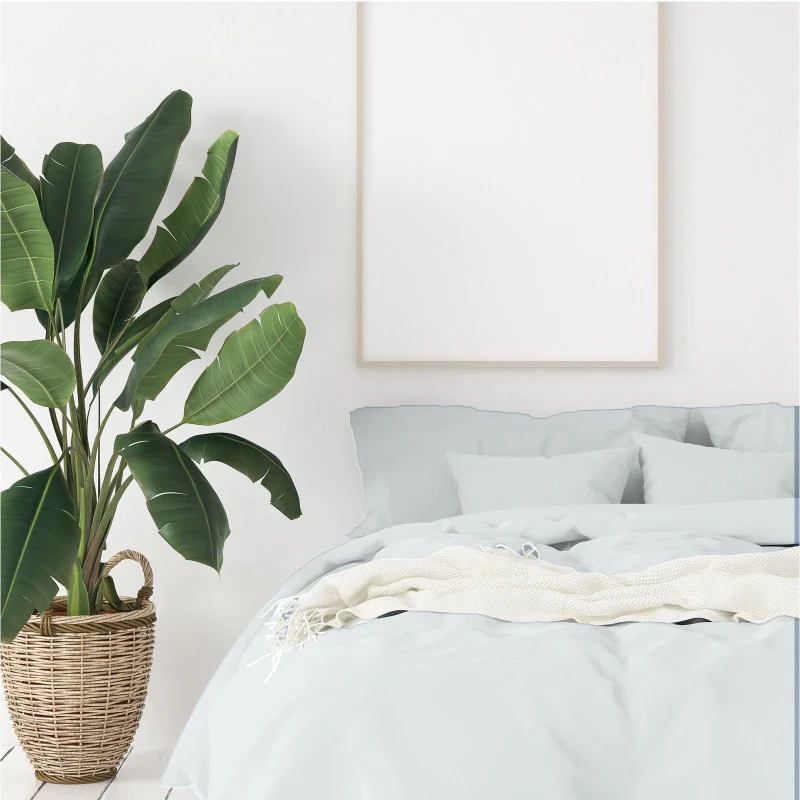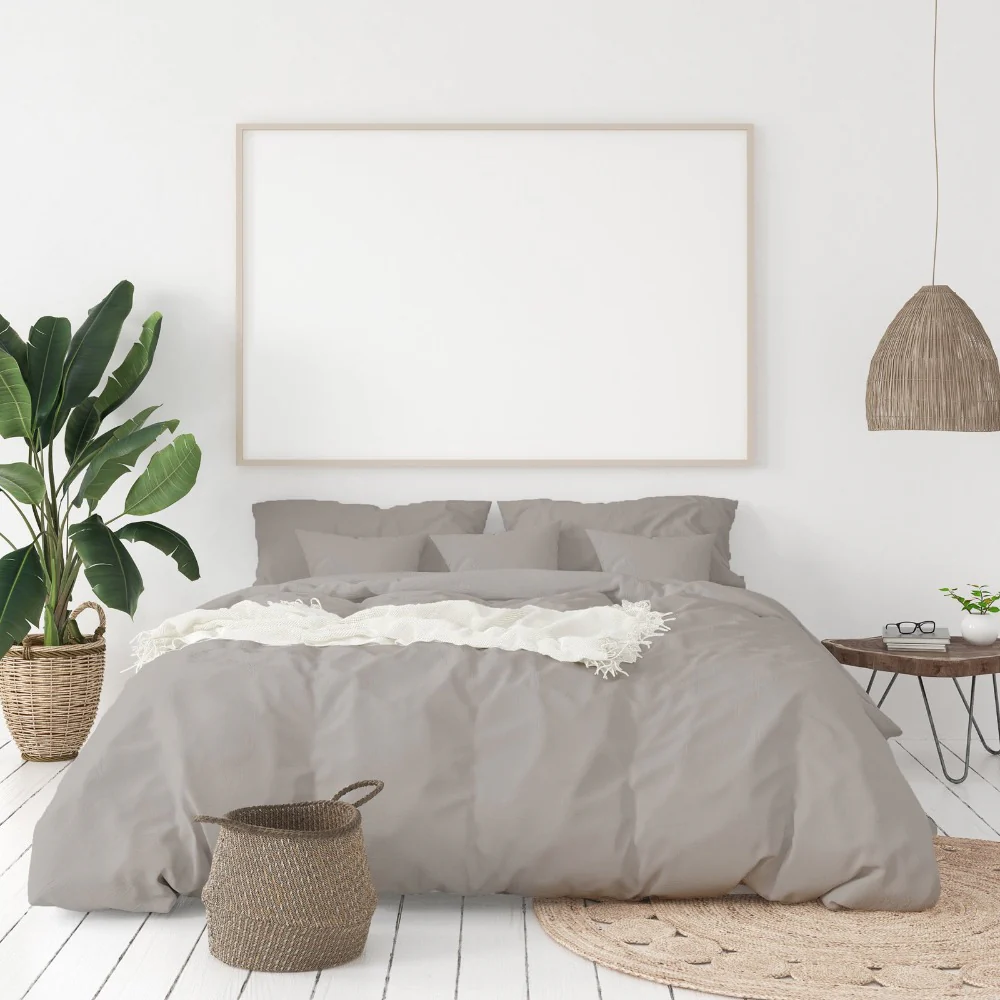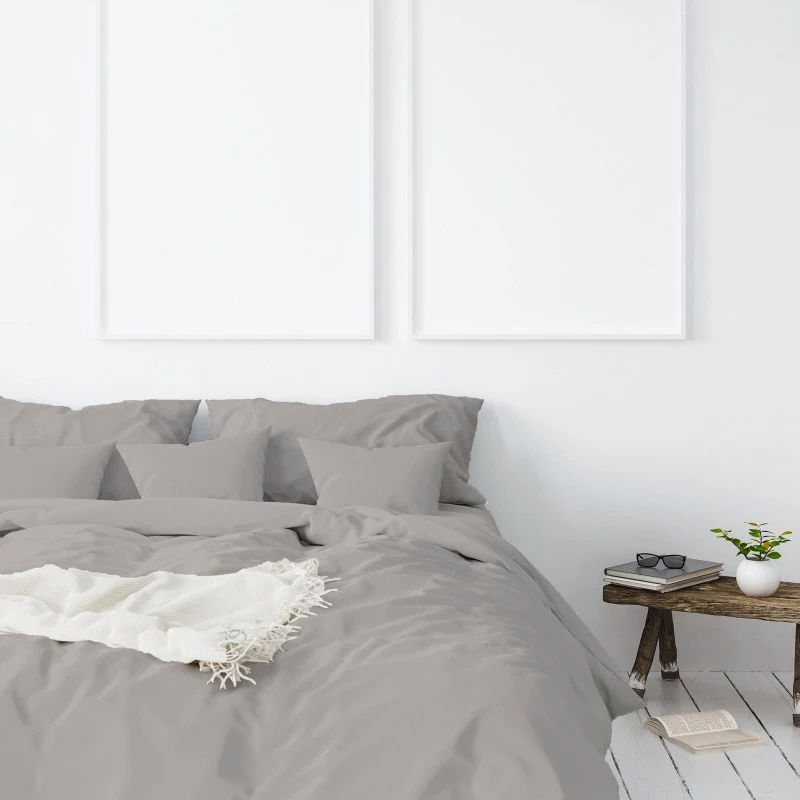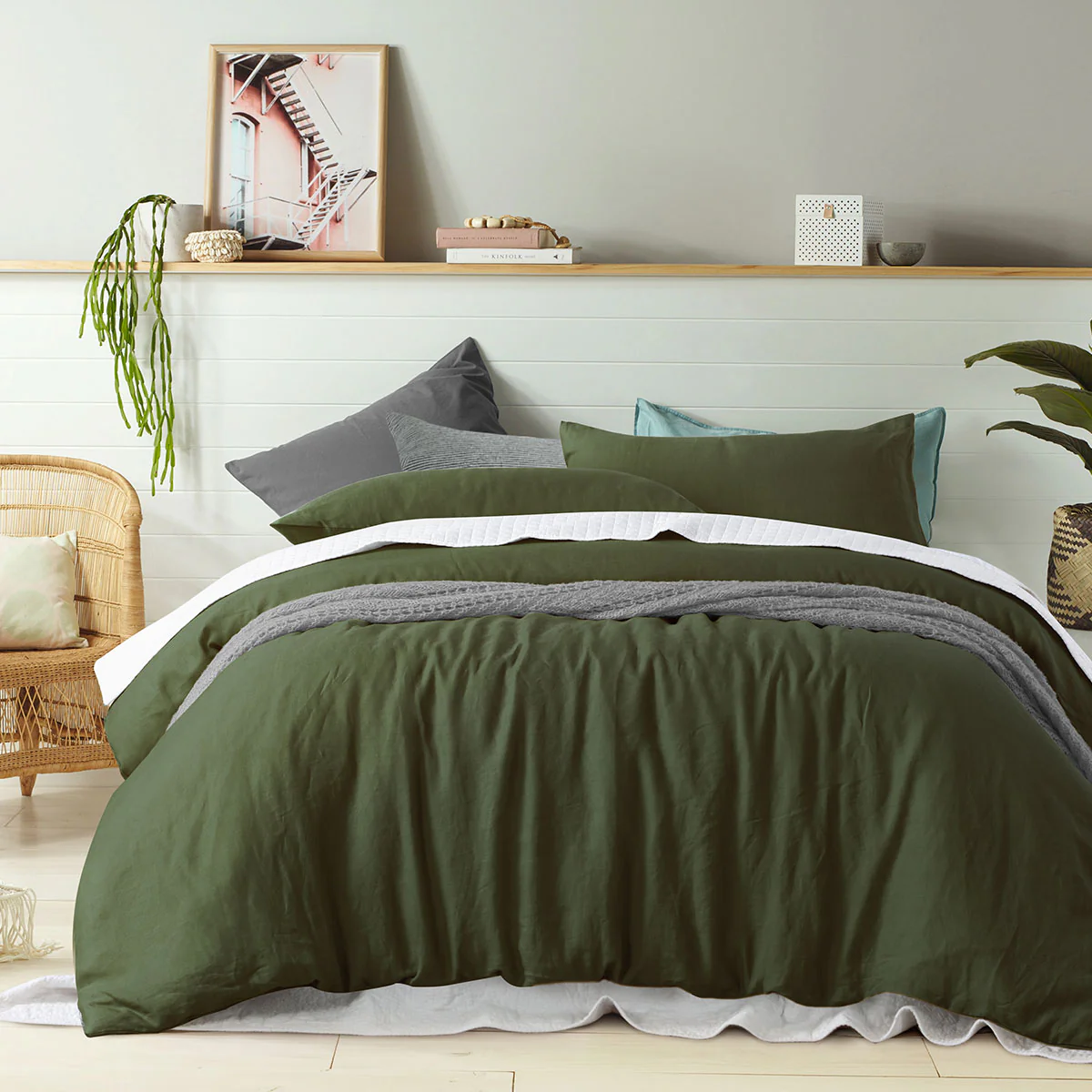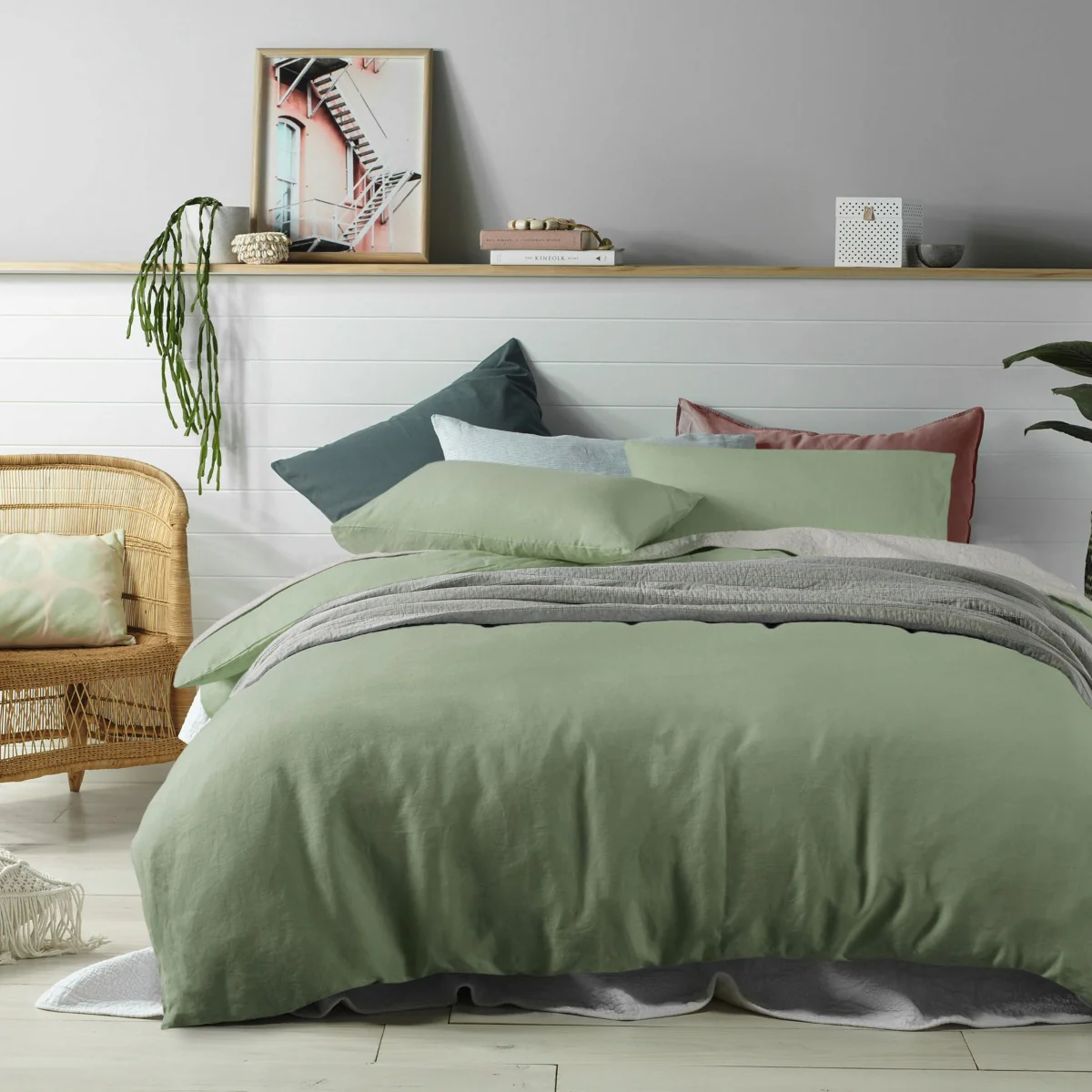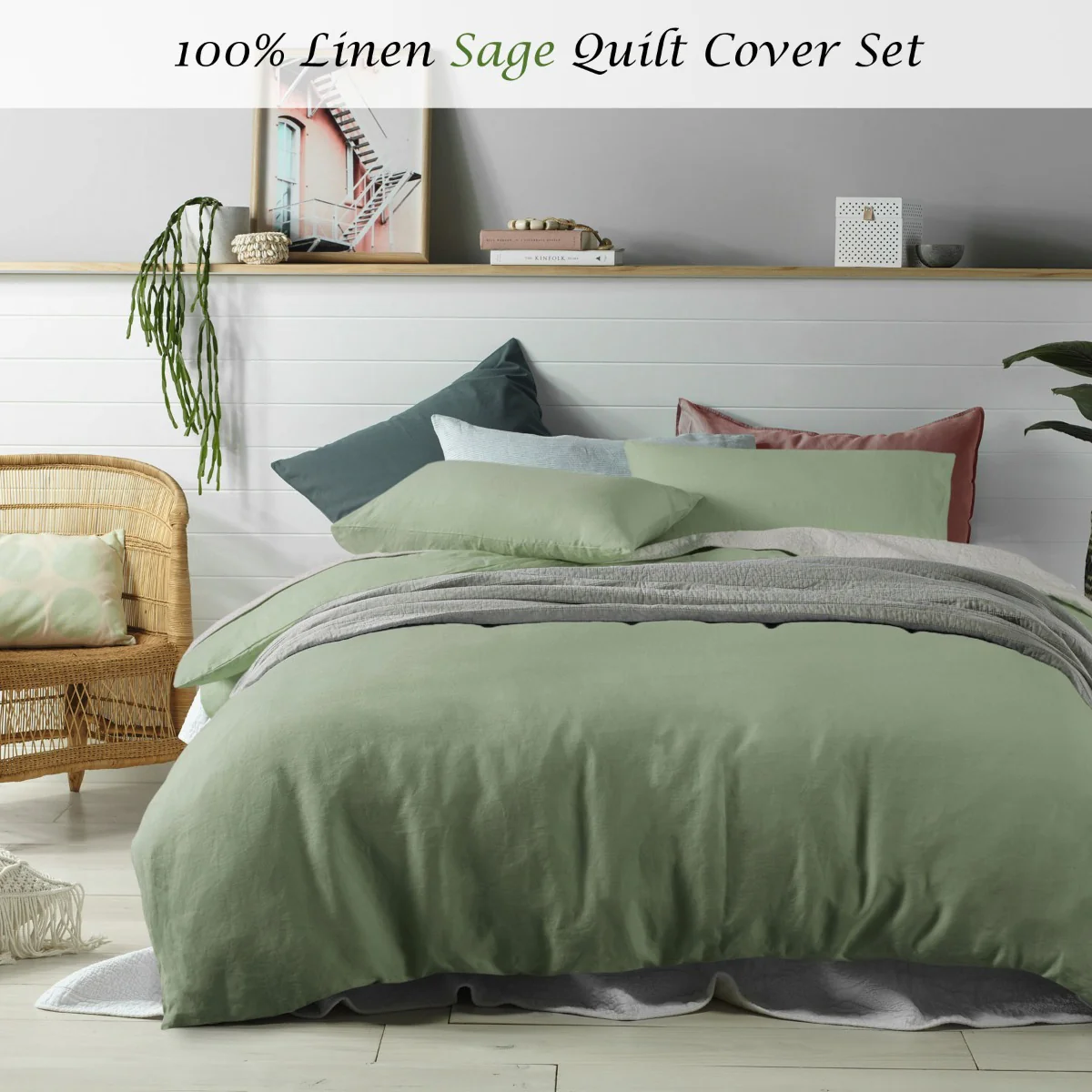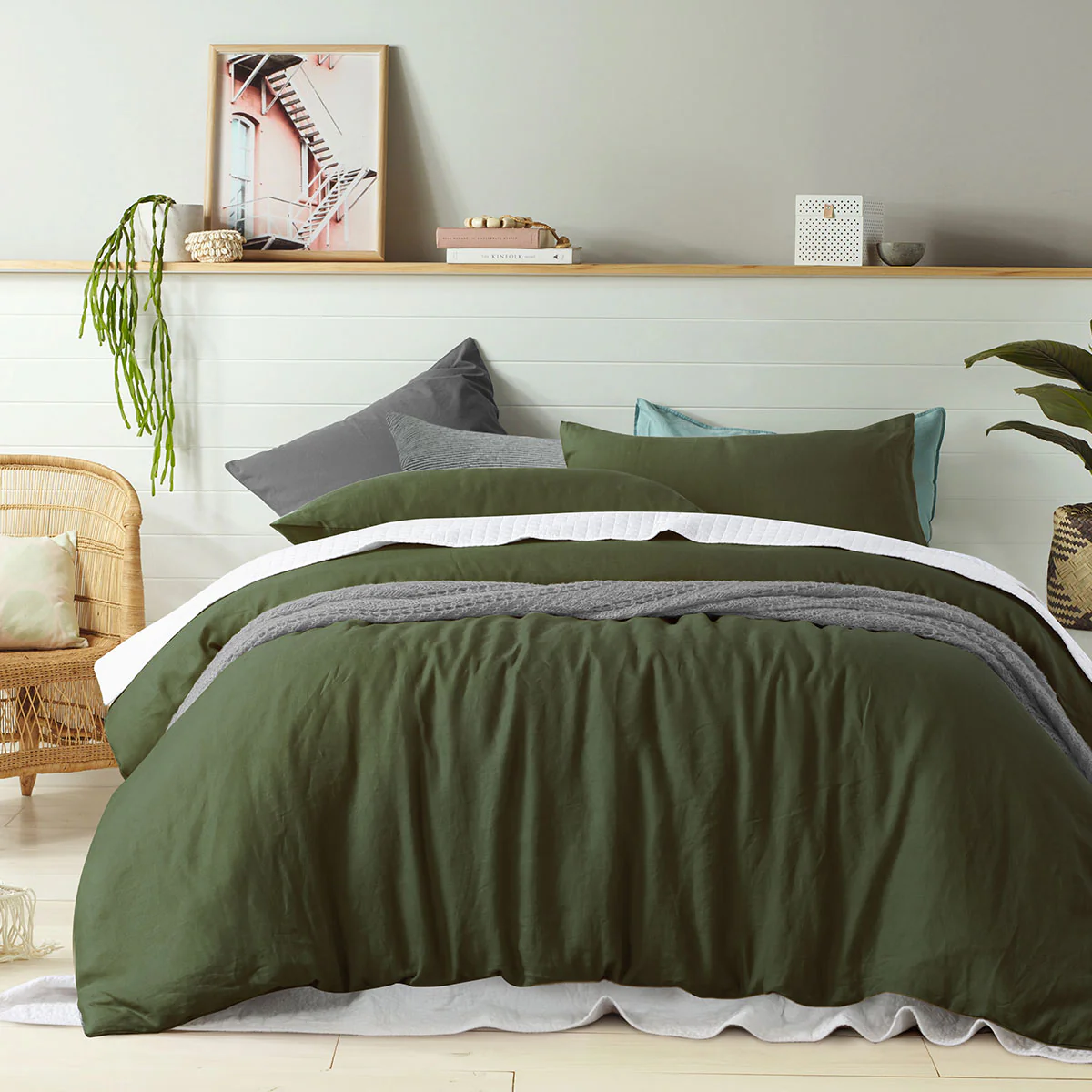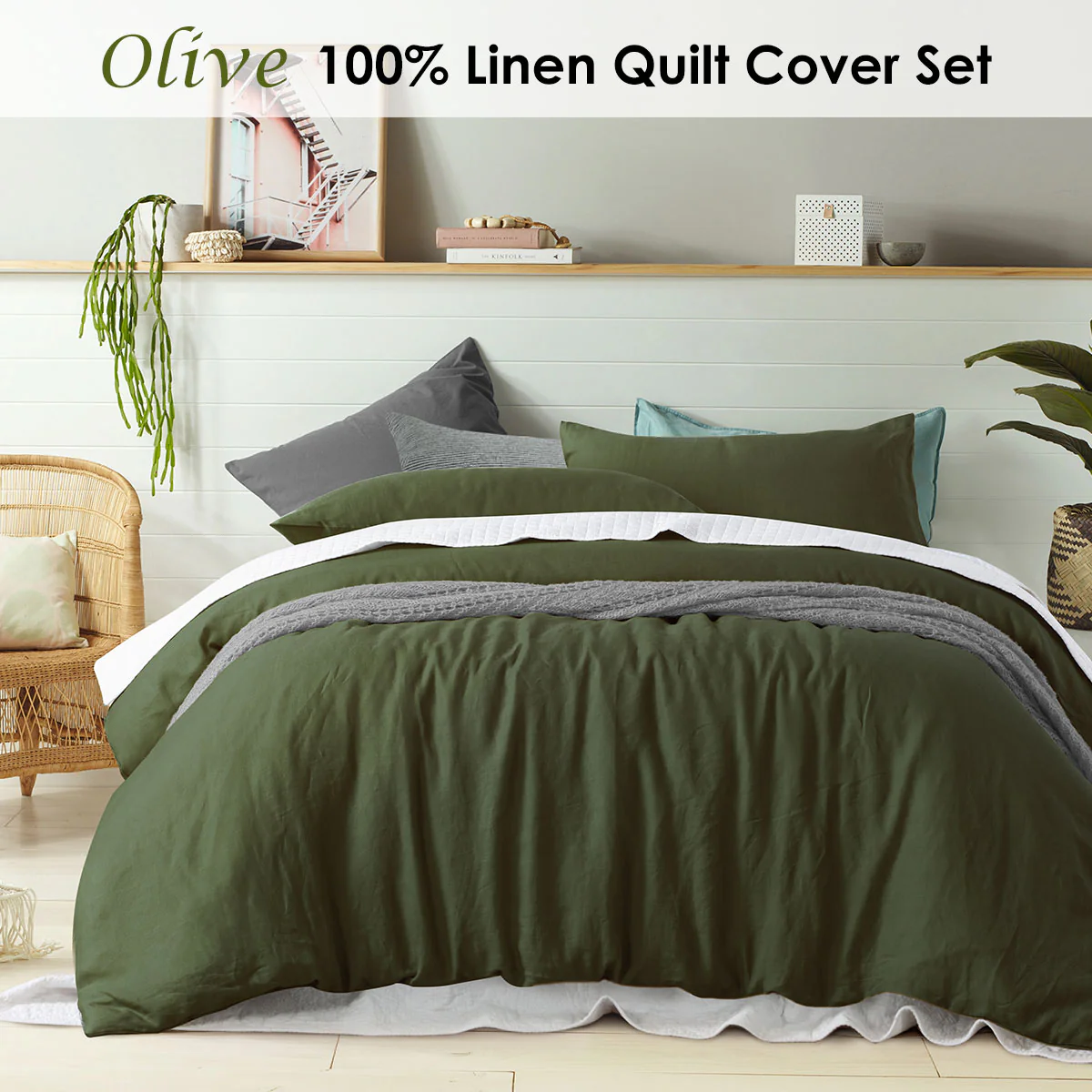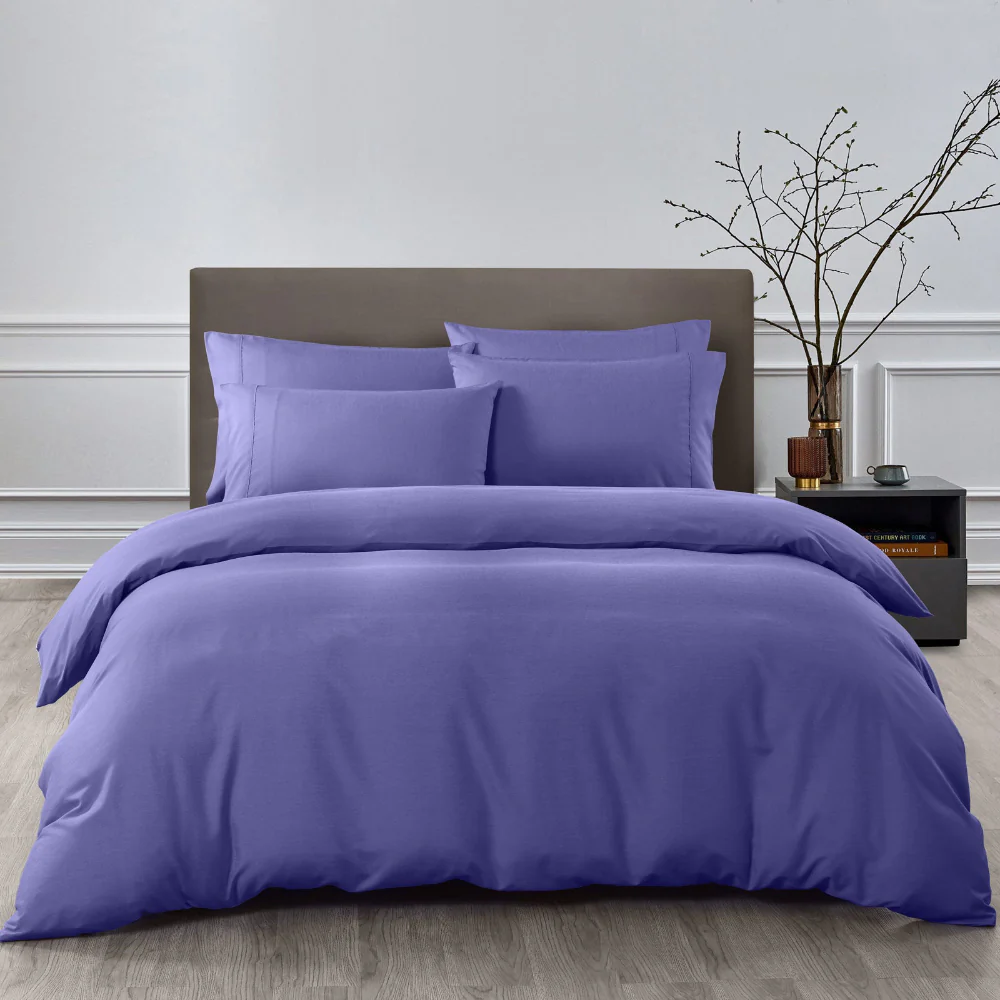
Renee Taylor | Tencel Lyocell Cotton Quilt Cover Set | 700TC | King
The Renee Taylor 700TC Tencel Lyocell & Cotton Quilt Cover Set is made from a 65% Tencel Lyocell and 35% cotton blend. Tencel Lyocell is a plant-derived fibre produced from sustainably sourced wood pulp using a closed-loop manufacturing process that recycles water and solvents. The result is a smooth, soft, breathable fabric with natural moisture-wicking properties that help regulate temperature through the night.
This listing is the King size. The set includes one quilt cover (245 × 210cm) and two standard pillowcases (48 × 74cm). Finished with clean cord piping.
Features
- Renee Taylor 700TC Tencel Lyocell range
- 65% Tencel Lyocell, 35% cotton
- 700 thread count
- Smooth, moisture-wicking, breathable fabric
- Natural temperature regulation
- Clean cord piping detail
- Sustainably produced Tencel Lyocell fibres (closed-loop process)
- OEKO-TEX certified — tested for harmful substances (supplier claim). OEKO-TEX® certification on this product is held by the manufacturer.
- Renee Taylor describes this fabric as hypoallergenic
Specifications
- Brand: Renee Taylor
- Size: King
- Set includes: 1 × quilt cover 245 × 210cm, 2 × pillowcases 48 × 74cm
Care
- Wash before first use
- Launder whites, prints, and colours separately
- Cold hand or machine wash on gentle cycle (30°C)
- Do not bleach
- Do not rub, soak, or wring; reduce spin
- Do not tumble dry — line dry in shade
- Cool iron on reverse if desired
- Do not dry clean
- Avoid products containing bleach
Frequently asked
Is this quilt cover hypoallergenic?
Tencel Lyocell blends are widely described as hypoallergenic. The smooth fibre surface is gentle against skin, and the breathability and moisture-wicking properties make it a comfortable choice for people with sensitivities. Renee Taylor describes this fabric as hypoallergenic, and it carries OEKO-TEX certification, which means it has been independently tested for harmful substances. "Hypoallergenic" isn't a regulated term in Australia though, so it doesn't carry a guaranteed standard across products. If you're managing a dust mite allergy specifically, the product designed to block allergen is a tightly-woven quilt encasement — that goes between the quilt and this cover, and does the barrier work. OEKO-TEX® certification on this product is held by the manufacturer.
What is OEKO-TEX certification?
OEKO-TEX Standard 100 is an independent certification that tests textiles for over 100 substances potentially harmful to humans — including heavy metals, formaldehyde, pesticide residues, and certain dyes. It confirms the fabric has been tested and found free of those substances at time of certification. It is not a claim about allergen barrier performance or dust mite resistance. OEKO-TEX® certification on this product is held by the manufacturer.
What is Tencel Lyocell?
Tencel Lyocell is a fibre derived from wood pulp — commonly eucalyptus — produced using a closed-loop process that recycles the water and solvents used in manufacturing. The resulting fibre is smooth, breathable, and moisture-wicking. It's a different material to bamboo viscose, cotton, or polyester, and is considered one of the more environmentally responsible synthetic-adjacent fibres available.
Can I wash this at 55°C to kill dust mites?
No — this cover is rated for cold wash only (30°C). Australian research found that washing at 55°C or higher kills 100% of dust mites, and that even a cold wash removes more than 90% of dust mite allergen (McDonald & Tovey, 1992, Journal of Allergy and Clinical Immunology). Regular cold washing will remove significant allergen load, but for mite killing, a quilt encasement washed separately at higher temperatures is the more practical lever.
Should I use a quilt protector over this?
Yes, if dust mite allergen is a concern. A tightly-woven encasement placed between the quilt and this cover creates a physical barrier that prevents allergen from the quilt reaching you while you sleep. The quilt cover itself is not a barrier product — it's a cover for style and comfort. Browse our dust mite quilt and doona protector range.
I have a dust mite allergy — what's the most important bedding step?
The setup most supported by published research is comprehensive bedroom control:
- Encase the mattress first — this is where the highest allergen load accumulates
- Encase the pillow — your face is in contact with this for hours each night
- Encase the quilt — the quilt drapes directly over you
- Wash encasements and pillowcases regularly — at 55°C to kill mites, or cold wash to remove allergen if hot isn't possible
- Keep bedroom humidity below ~50% — dust mites struggle in drier air
- Consider air purification
This quilt cover is one component of a comfortable bedroom setup — the encasements and washing routine are doing the allergy management work. For advice specific to your situation, your GP or allergy specialist is the right person to speak to.
General educational content. Not medical advice.
Original: $89.58
-65%$89.58
$31.35Renee Taylor | Tencel Lyocell Cotton Quilt Cover Set | 700TC | King
The Renee Taylor 700TC Tencel Lyocell & Cotton Quilt Cover Set is made from a 65% Tencel Lyocell and 35% cotton blend. Tencel Lyocell is a plant-derived fibre produced from sustainably sourced wood pulp using a closed-loop manufacturing process that recycles water and solvents. The result is a smooth, soft, breathable fabric with natural moisture-wicking properties that help regulate temperature through the night.
This listing is the King size. The set includes one quilt cover (245 × 210cm) and two standard pillowcases (48 × 74cm). Finished with clean cord piping.
Features
- Renee Taylor 700TC Tencel Lyocell range
- 65% Tencel Lyocell, 35% cotton
- 700 thread count
- Smooth, moisture-wicking, breathable fabric
- Natural temperature regulation
- Clean cord piping detail
- Sustainably produced Tencel Lyocell fibres (closed-loop process)
- OEKO-TEX certified — tested for harmful substances (supplier claim). OEKO-TEX® certification on this product is held by the manufacturer.
- Renee Taylor describes this fabric as hypoallergenic
Specifications
- Brand: Renee Taylor
- Size: King
- Set includes: 1 × quilt cover 245 × 210cm, 2 × pillowcases 48 × 74cm
Care
- Wash before first use
- Launder whites, prints, and colours separately
- Cold hand or machine wash on gentle cycle (30°C)
- Do not bleach
- Do not rub, soak, or wring; reduce spin
- Do not tumble dry — line dry in shade
- Cool iron on reverse if desired
- Do not dry clean
- Avoid products containing bleach
Frequently asked
Is this quilt cover hypoallergenic?
Tencel Lyocell blends are widely described as hypoallergenic. The smooth fibre surface is gentle against skin, and the breathability and moisture-wicking properties make it a comfortable choice for people with sensitivities. Renee Taylor describes this fabric as hypoallergenic, and it carries OEKO-TEX certification, which means it has been independently tested for harmful substances. "Hypoallergenic" isn't a regulated term in Australia though, so it doesn't carry a guaranteed standard across products. If you're managing a dust mite allergy specifically, the product designed to block allergen is a tightly-woven quilt encasement — that goes between the quilt and this cover, and does the barrier work. OEKO-TEX® certification on this product is held by the manufacturer.
What is OEKO-TEX certification?
OEKO-TEX Standard 100 is an independent certification that tests textiles for over 100 substances potentially harmful to humans — including heavy metals, formaldehyde, pesticide residues, and certain dyes. It confirms the fabric has been tested and found free of those substances at time of certification. It is not a claim about allergen barrier performance or dust mite resistance. OEKO-TEX® certification on this product is held by the manufacturer.
What is Tencel Lyocell?
Tencel Lyocell is a fibre derived from wood pulp — commonly eucalyptus — produced using a closed-loop process that recycles the water and solvents used in manufacturing. The resulting fibre is smooth, breathable, and moisture-wicking. It's a different material to bamboo viscose, cotton, or polyester, and is considered one of the more environmentally responsible synthetic-adjacent fibres available.
Can I wash this at 55°C to kill dust mites?
No — this cover is rated for cold wash only (30°C). Australian research found that washing at 55°C or higher kills 100% of dust mites, and that even a cold wash removes more than 90% of dust mite allergen (McDonald & Tovey, 1992, Journal of Allergy and Clinical Immunology). Regular cold washing will remove significant allergen load, but for mite killing, a quilt encasement washed separately at higher temperatures is the more practical lever.
Should I use a quilt protector over this?
Yes, if dust mite allergen is a concern. A tightly-woven encasement placed between the quilt and this cover creates a physical barrier that prevents allergen from the quilt reaching you while you sleep. The quilt cover itself is not a barrier product — it's a cover for style and comfort. Browse our dust mite quilt and doona protector range.
I have a dust mite allergy — what's the most important bedding step?
The setup most supported by published research is comprehensive bedroom control:
- Encase the mattress first — this is where the highest allergen load accumulates
- Encase the pillow — your face is in contact with this for hours each night
- Encase the quilt — the quilt drapes directly over you
- Wash encasements and pillowcases regularly — at 55°C to kill mites, or cold wash to remove allergen if hot isn't possible
- Keep bedroom humidity below ~50% — dust mites struggle in drier air
- Consider air purification
This quilt cover is one component of a comfortable bedroom setup — the encasements and washing routine are doing the allergy management work. For advice specific to your situation, your GP or allergy specialist is the right person to speak to.
General educational content. Not medical advice.
Product Information
Product Information
Shipping & Returns
Shipping & Returns
Description
The Renee Taylor 700TC Tencel Lyocell & Cotton Quilt Cover Set is made from a 65% Tencel Lyocell and 35% cotton blend. Tencel Lyocell is a plant-derived fibre produced from sustainably sourced wood pulp using a closed-loop manufacturing process that recycles water and solvents. The result is a smooth, soft, breathable fabric with natural moisture-wicking properties that help regulate temperature through the night.
This listing is the King size. The set includes one quilt cover (245 × 210cm) and two standard pillowcases (48 × 74cm). Finished with clean cord piping.
Features
- Renee Taylor 700TC Tencel Lyocell range
- 65% Tencel Lyocell, 35% cotton
- 700 thread count
- Smooth, moisture-wicking, breathable fabric
- Natural temperature regulation
- Clean cord piping detail
- Sustainably produced Tencel Lyocell fibres (closed-loop process)
- OEKO-TEX certified — tested for harmful substances (supplier claim). OEKO-TEX® certification on this product is held by the manufacturer.
- Renee Taylor describes this fabric as hypoallergenic
Specifications
- Brand: Renee Taylor
- Size: King
- Set includes: 1 × quilt cover 245 × 210cm, 2 × pillowcases 48 × 74cm
Care
- Wash before first use
- Launder whites, prints, and colours separately
- Cold hand or machine wash on gentle cycle (30°C)
- Do not bleach
- Do not rub, soak, or wring; reduce spin
- Do not tumble dry — line dry in shade
- Cool iron on reverse if desired
- Do not dry clean
- Avoid products containing bleach
Frequently asked
Is this quilt cover hypoallergenic?
Tencel Lyocell blends are widely described as hypoallergenic. The smooth fibre surface is gentle against skin, and the breathability and moisture-wicking properties make it a comfortable choice for people with sensitivities. Renee Taylor describes this fabric as hypoallergenic, and it carries OEKO-TEX certification, which means it has been independently tested for harmful substances. "Hypoallergenic" isn't a regulated term in Australia though, so it doesn't carry a guaranteed standard across products. If you're managing a dust mite allergy specifically, the product designed to block allergen is a tightly-woven quilt encasement — that goes between the quilt and this cover, and does the barrier work. OEKO-TEX® certification on this product is held by the manufacturer.
What is OEKO-TEX certification?
OEKO-TEX Standard 100 is an independent certification that tests textiles for over 100 substances potentially harmful to humans — including heavy metals, formaldehyde, pesticide residues, and certain dyes. It confirms the fabric has been tested and found free of those substances at time of certification. It is not a claim about allergen barrier performance or dust mite resistance. OEKO-TEX® certification on this product is held by the manufacturer.
What is Tencel Lyocell?
Tencel Lyocell is a fibre derived from wood pulp — commonly eucalyptus — produced using a closed-loop process that recycles the water and solvents used in manufacturing. The resulting fibre is smooth, breathable, and moisture-wicking. It's a different material to bamboo viscose, cotton, or polyester, and is considered one of the more environmentally responsible synthetic-adjacent fibres available.
Can I wash this at 55°C to kill dust mites?
No — this cover is rated for cold wash only (30°C). Australian research found that washing at 55°C or higher kills 100% of dust mites, and that even a cold wash removes more than 90% of dust mite allergen (McDonald & Tovey, 1992, Journal of Allergy and Clinical Immunology). Regular cold washing will remove significant allergen load, but for mite killing, a quilt encasement washed separately at higher temperatures is the more practical lever.
Should I use a quilt protector over this?
Yes, if dust mite allergen is a concern. A tightly-woven encasement placed between the quilt and this cover creates a physical barrier that prevents allergen from the quilt reaching you while you sleep. The quilt cover itself is not a barrier product — it's a cover for style and comfort. Browse our dust mite quilt and doona protector range.
I have a dust mite allergy — what's the most important bedding step?
The setup most supported by published research is comprehensive bedroom control:
- Encase the mattress first — this is where the highest allergen load accumulates
- Encase the pillow — your face is in contact with this for hours each night
- Encase the quilt — the quilt drapes directly over you
- Wash encasements and pillowcases regularly — at 55°C to kill mites, or cold wash to remove allergen if hot isn't possible
- Keep bedroom humidity below ~50% — dust mites struggle in drier air
- Consider air purification
This quilt cover is one component of a comfortable bedroom setup — the encasements and washing routine are doing the allergy management work. For advice specific to your situation, your GP or allergy specialist is the right person to speak to.
General educational content. Not medical advice.