Waterproof Dust Mite Mattress Protector & Encasement | 24–33cm | AU
Dust mite mattress protector, 24–33cm — waterproof, zippered
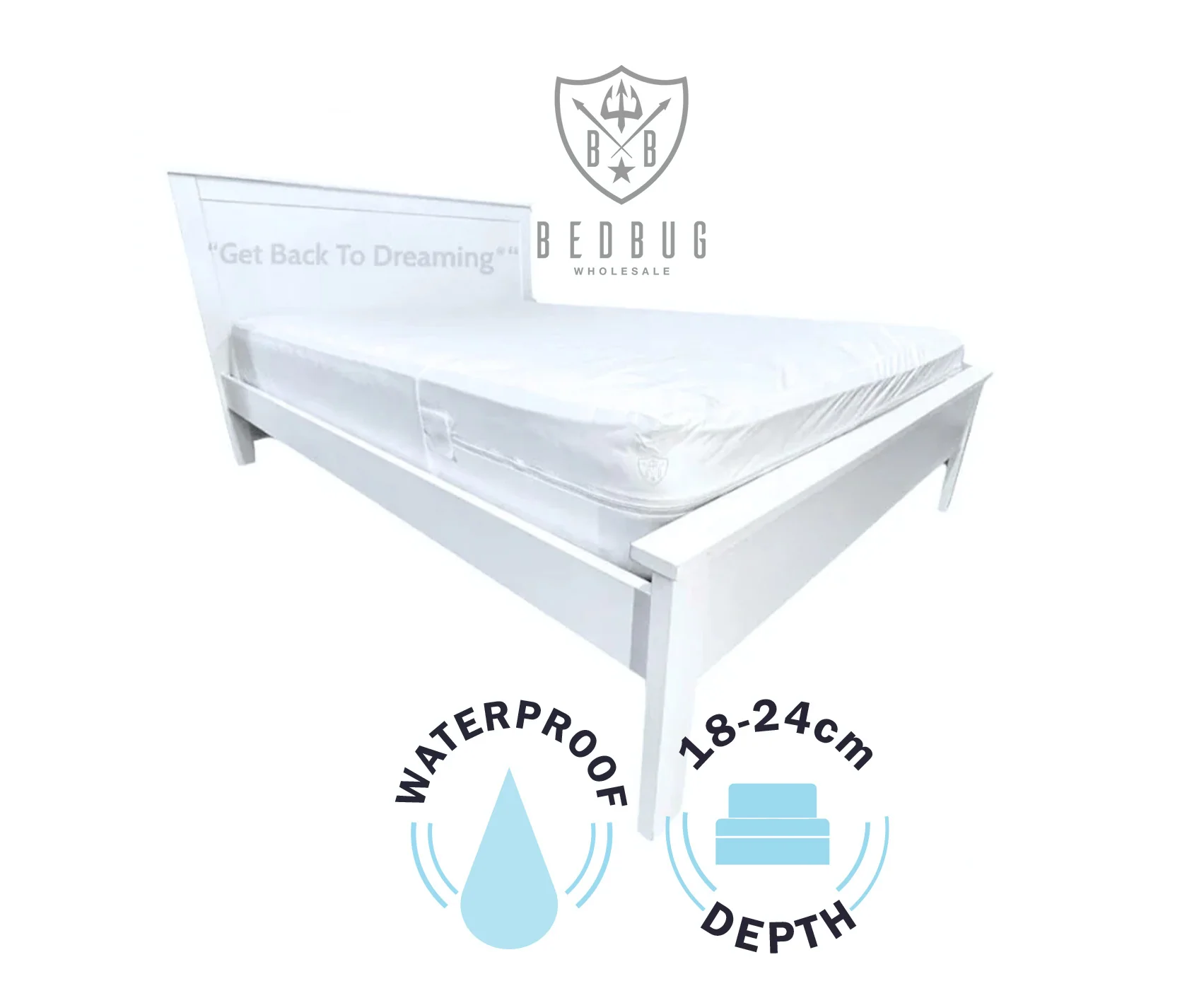
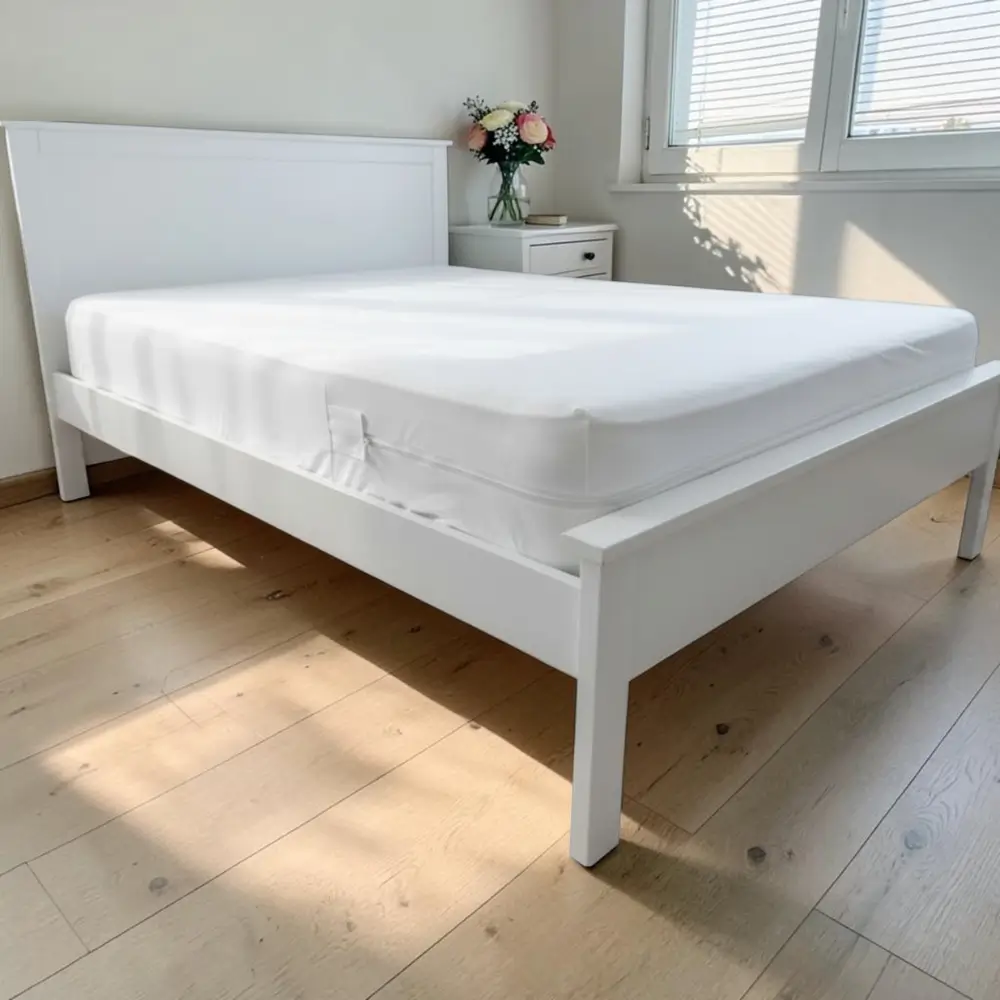
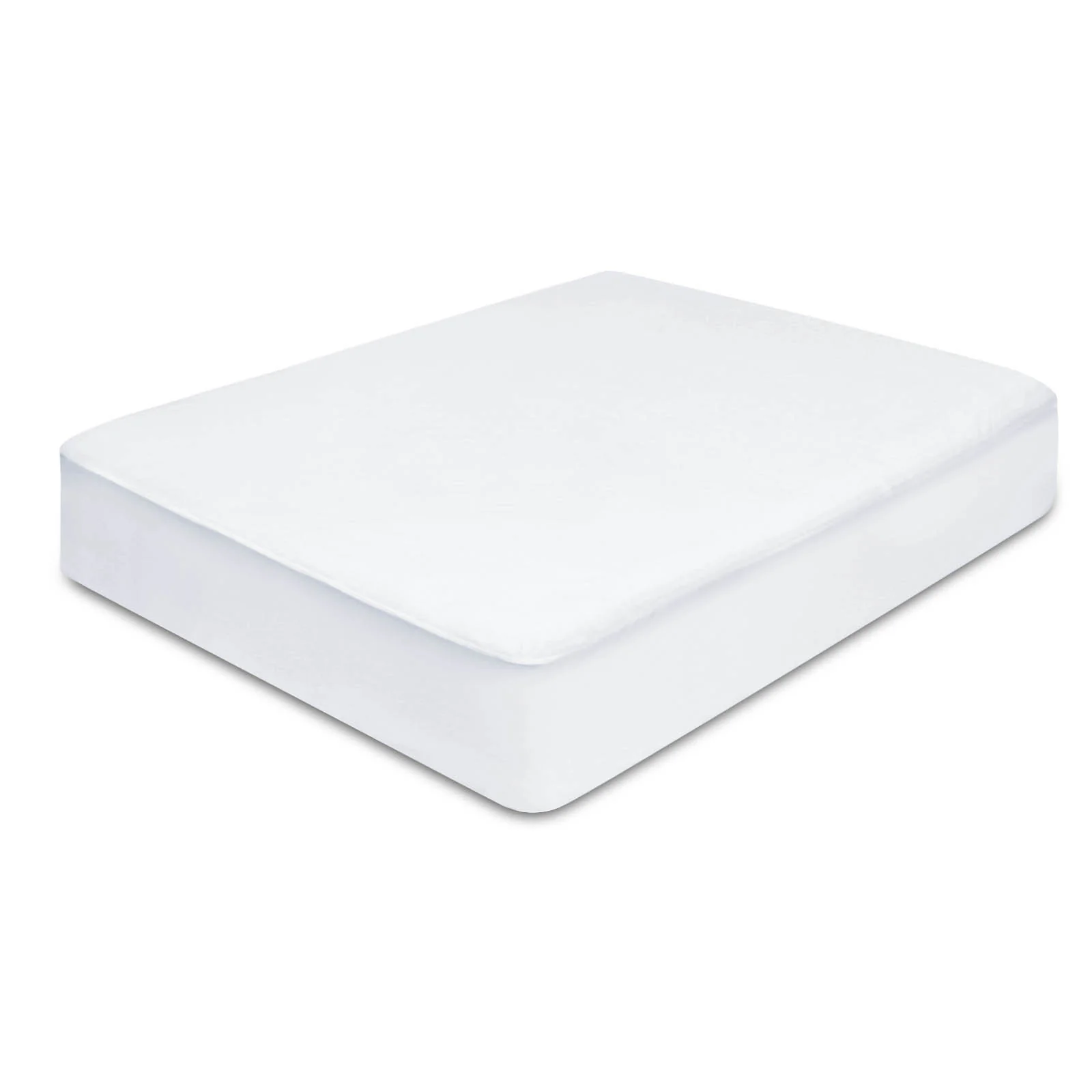
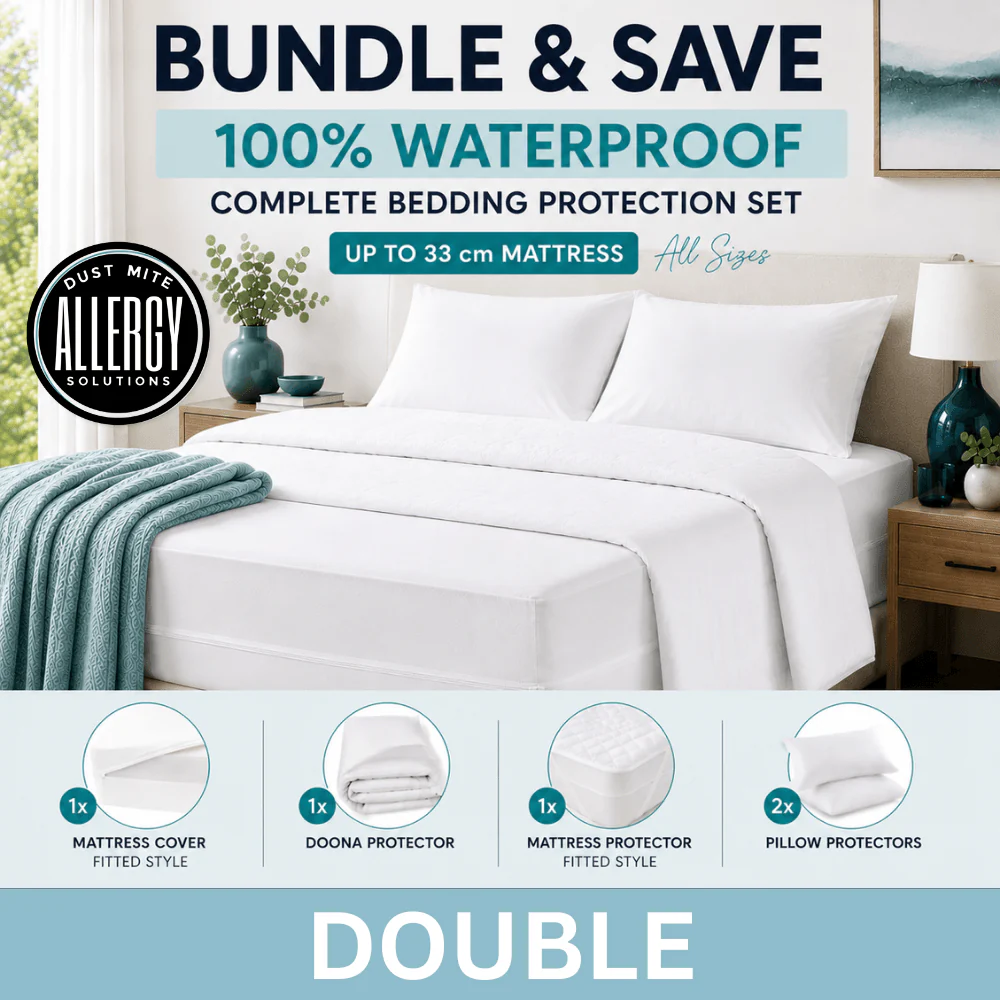
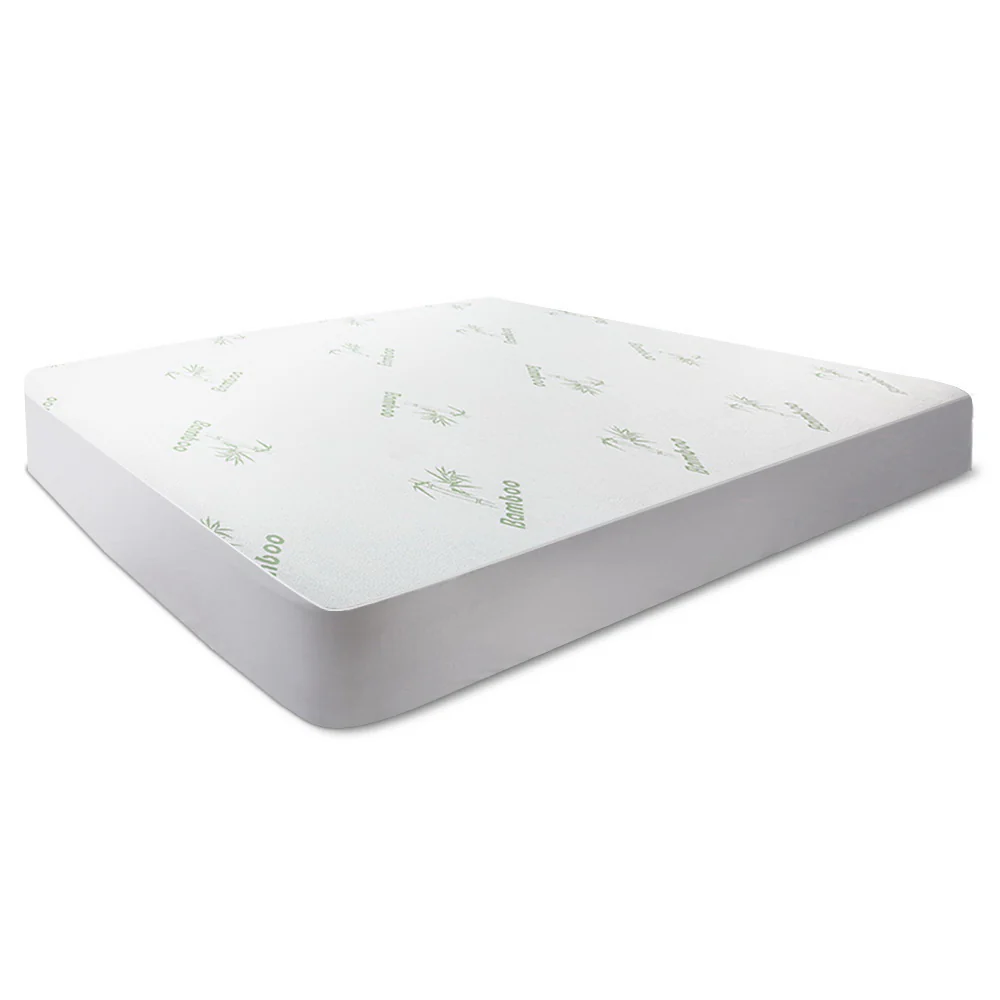
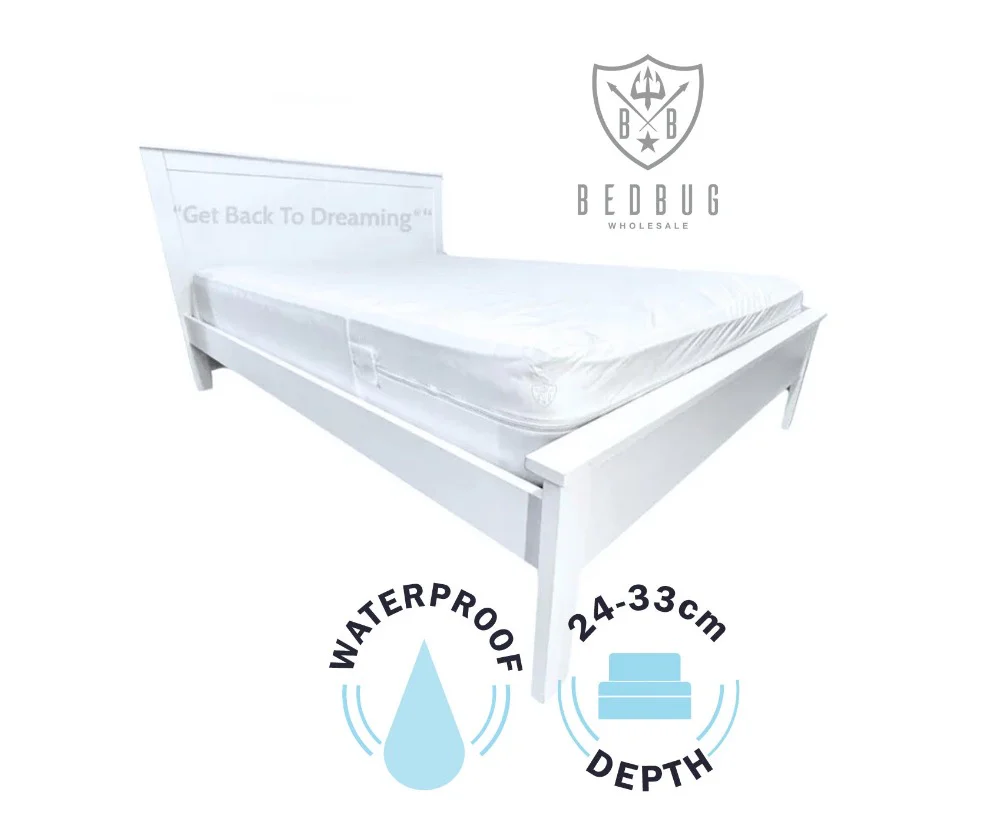
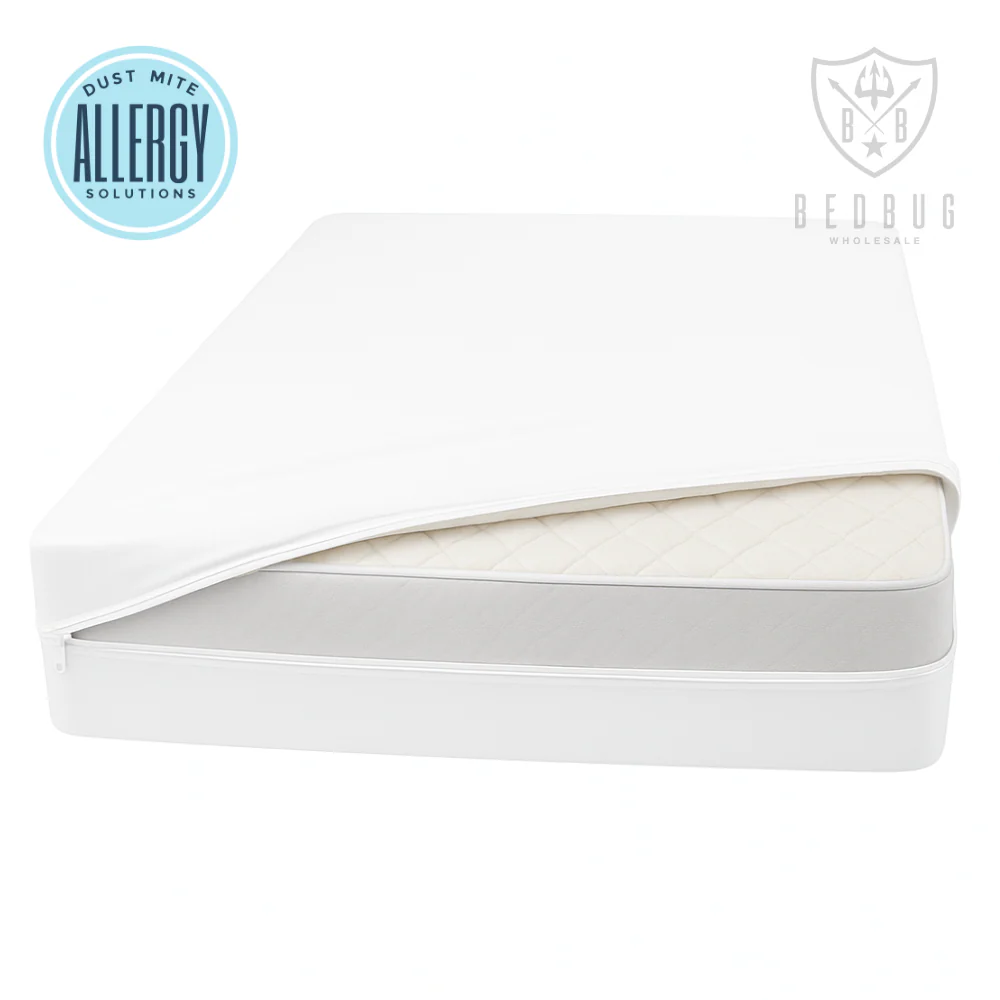
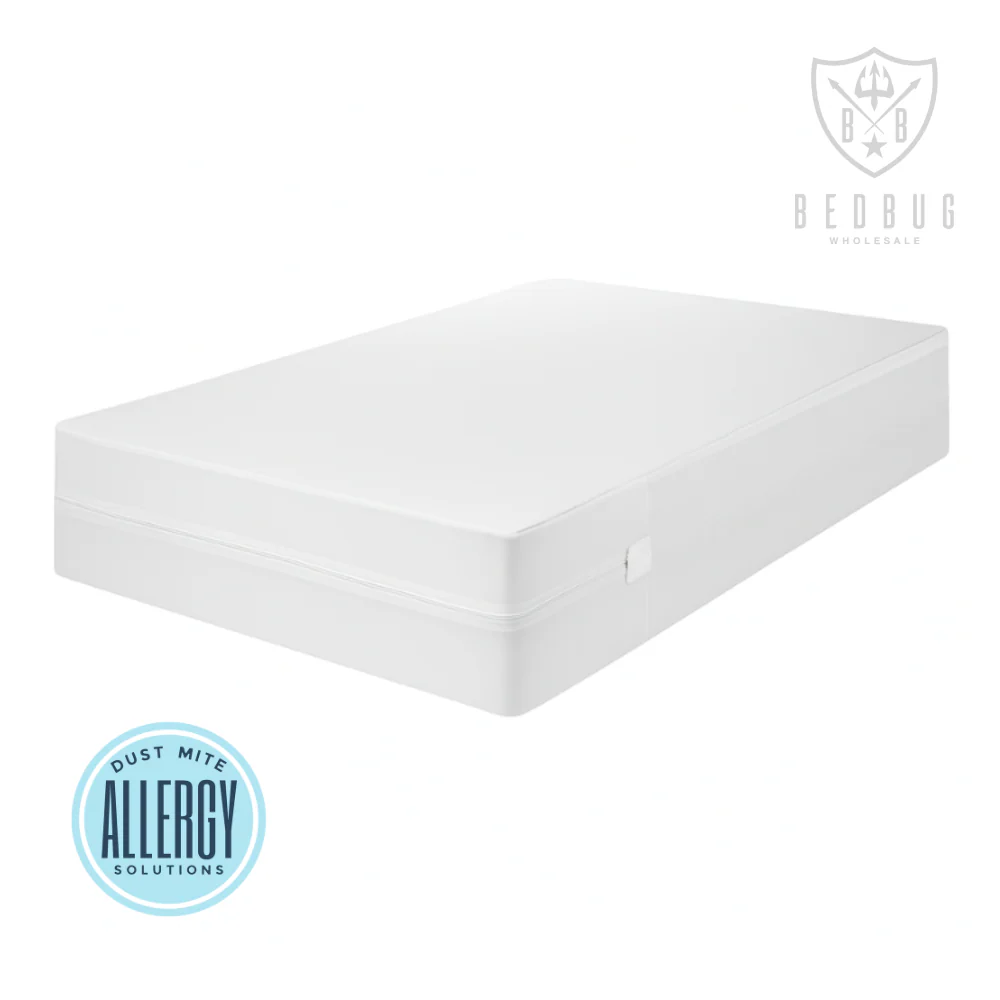
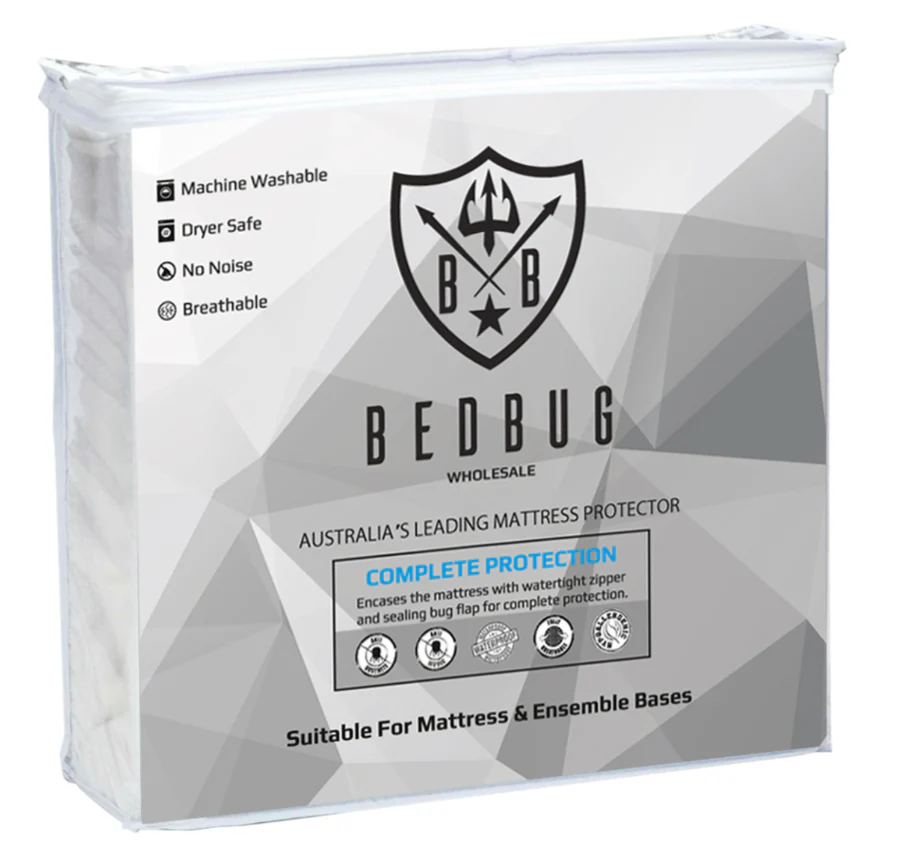
A waterproof mattress encasement for deeper mattresses (24–33cm), sealing all six sides to keep dust mite allergens trapped inside and blocking liquid spills.
Your mattress is one of the largest dust mite allergen reservoirs in the home.
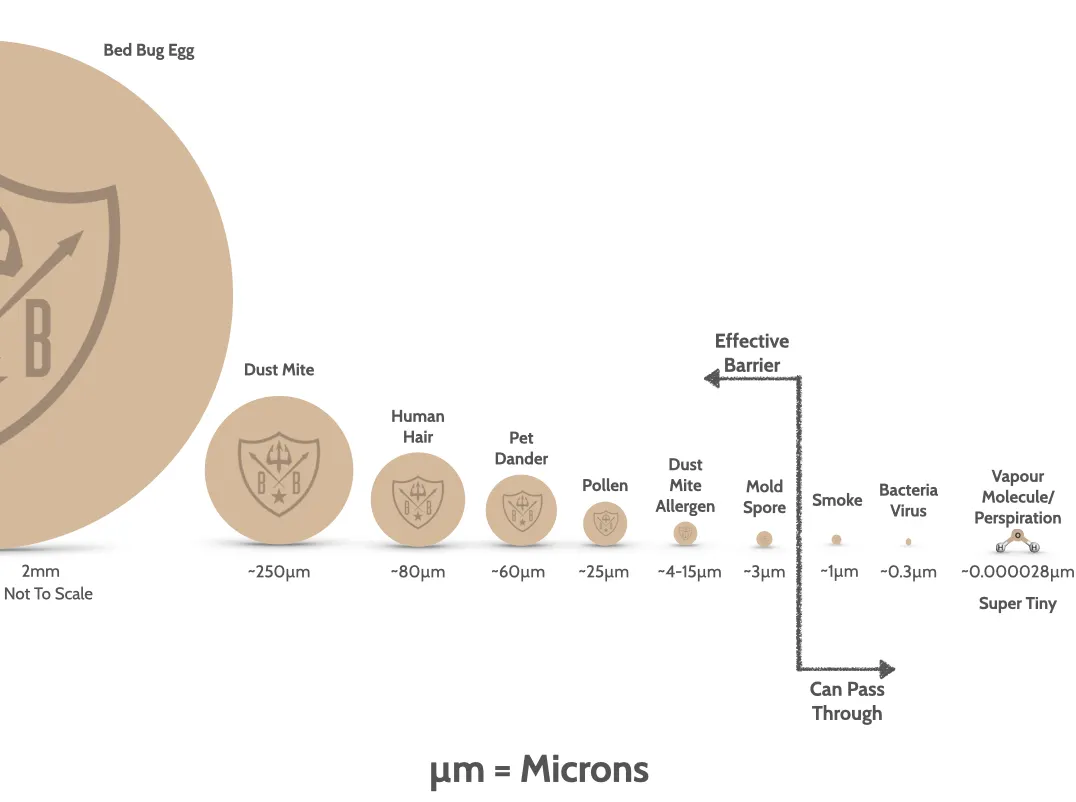
The microporous TPU membrane creates a barrier against the fine particles that carry those allergens (typically 10–40 microns), while also being waterproof. A fitted mattress protector goes over the top.
What makes a dust mite mattress protector effective
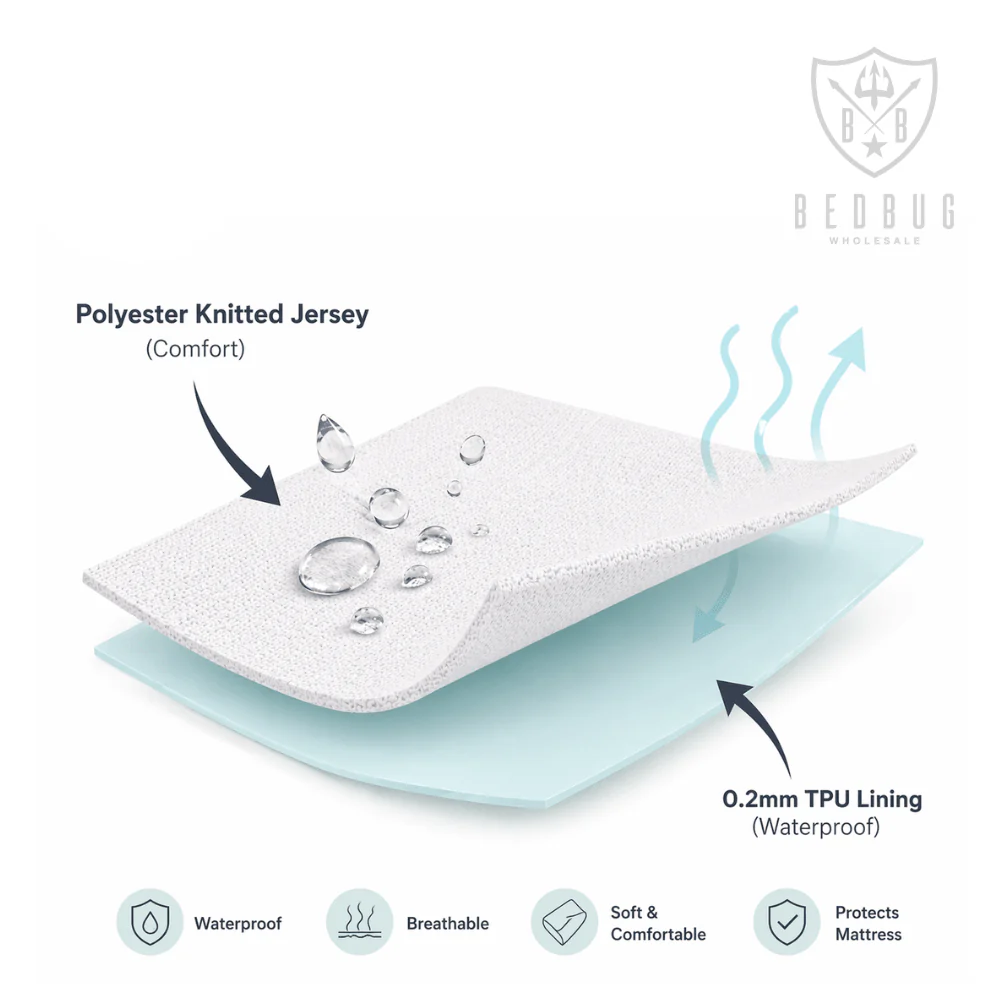
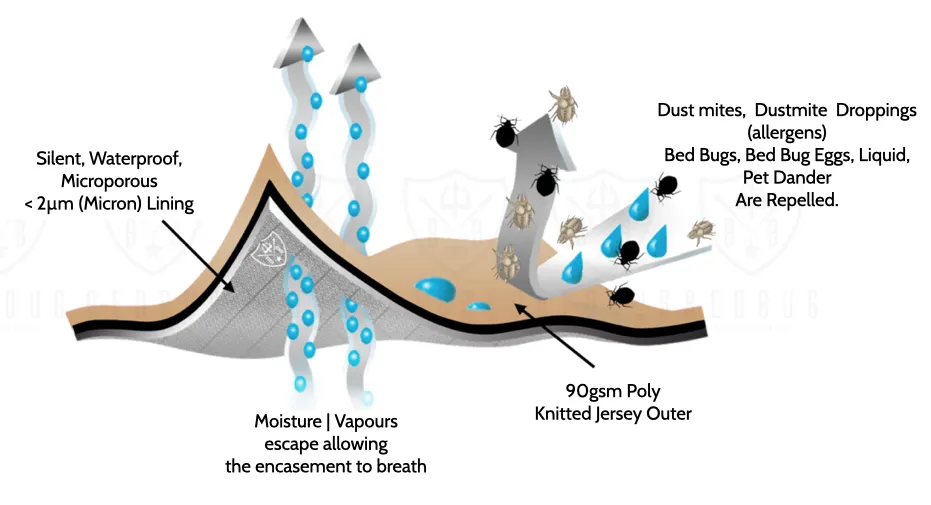
A microporous TPU membrane with pores measured at around 0.16 microns — far smaller than the 10–40 micron particles that carry dust mite allergens — laminated behind a soft, silent jersey outer and sealed with enclosed binding seams. Pore-size figures are supplied by the manufacturer, Fifth Ridge Pty Ltd, from third-party testing.
- Dust mite allergen barrier — pores well below allergen-particle size, so dust mite waste stays sealed inside the mattress and out of the air you breathe.
- Waterproof TPU barrier — blocks spills, sweat and incontinence; useful for bedwetting, aged care, or households with pets.
- Breathable, not sweaty — the membrane is microporous, letting water vapour through so the encasement still breathes.
- Enclosed binding seams — the fabric edges are sealed inside a bound seam, so the barrier stays continuous along every join.
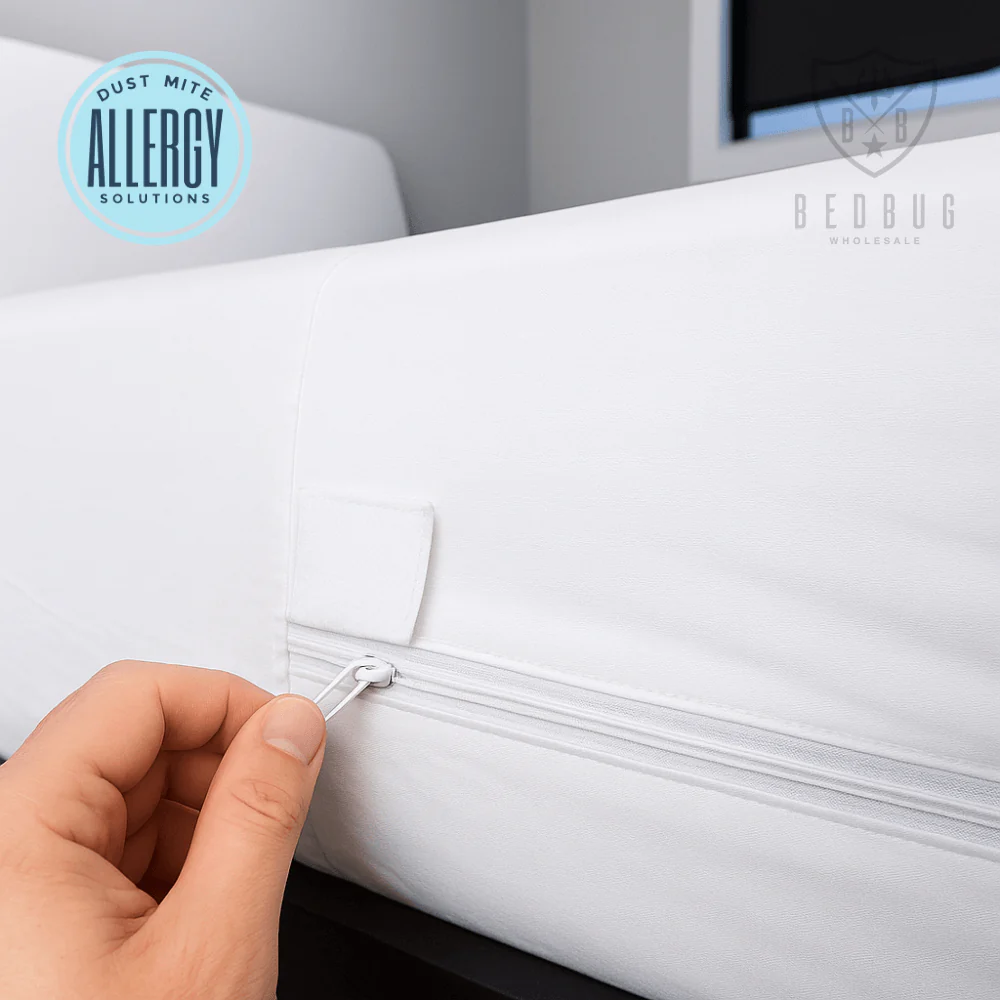
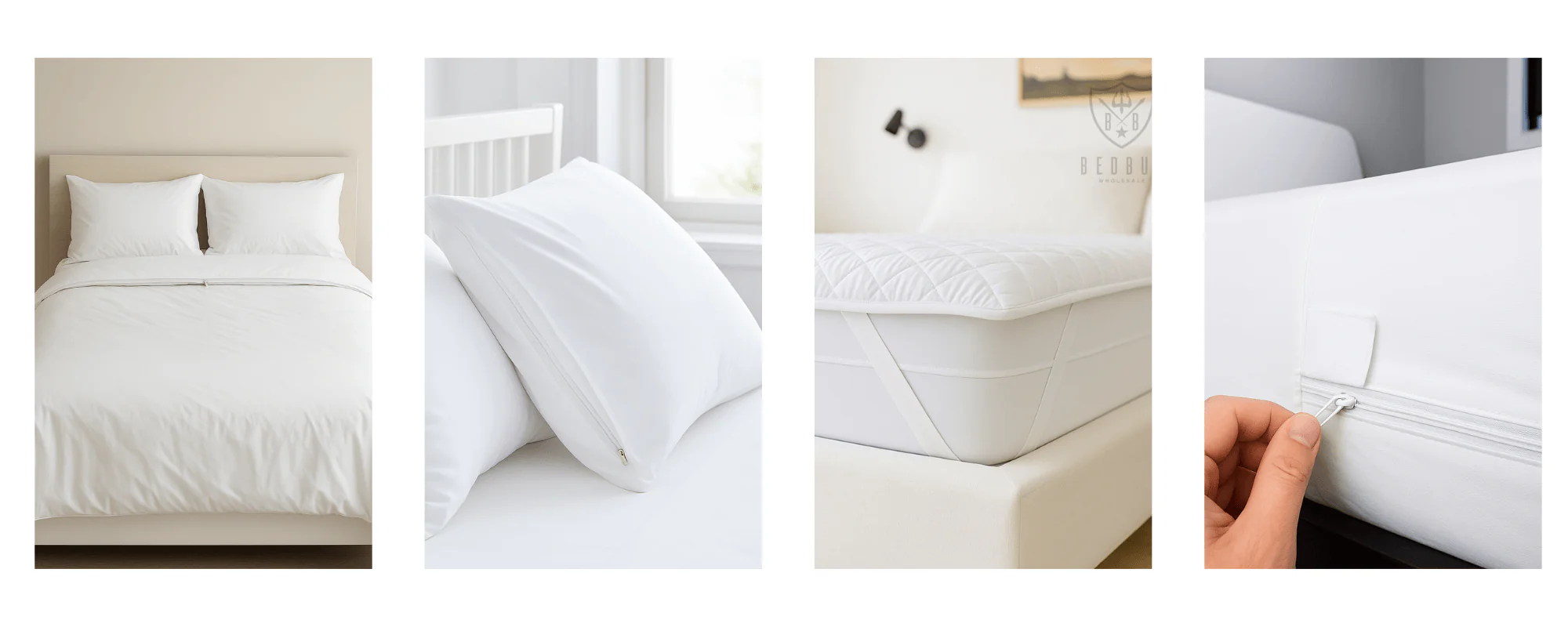
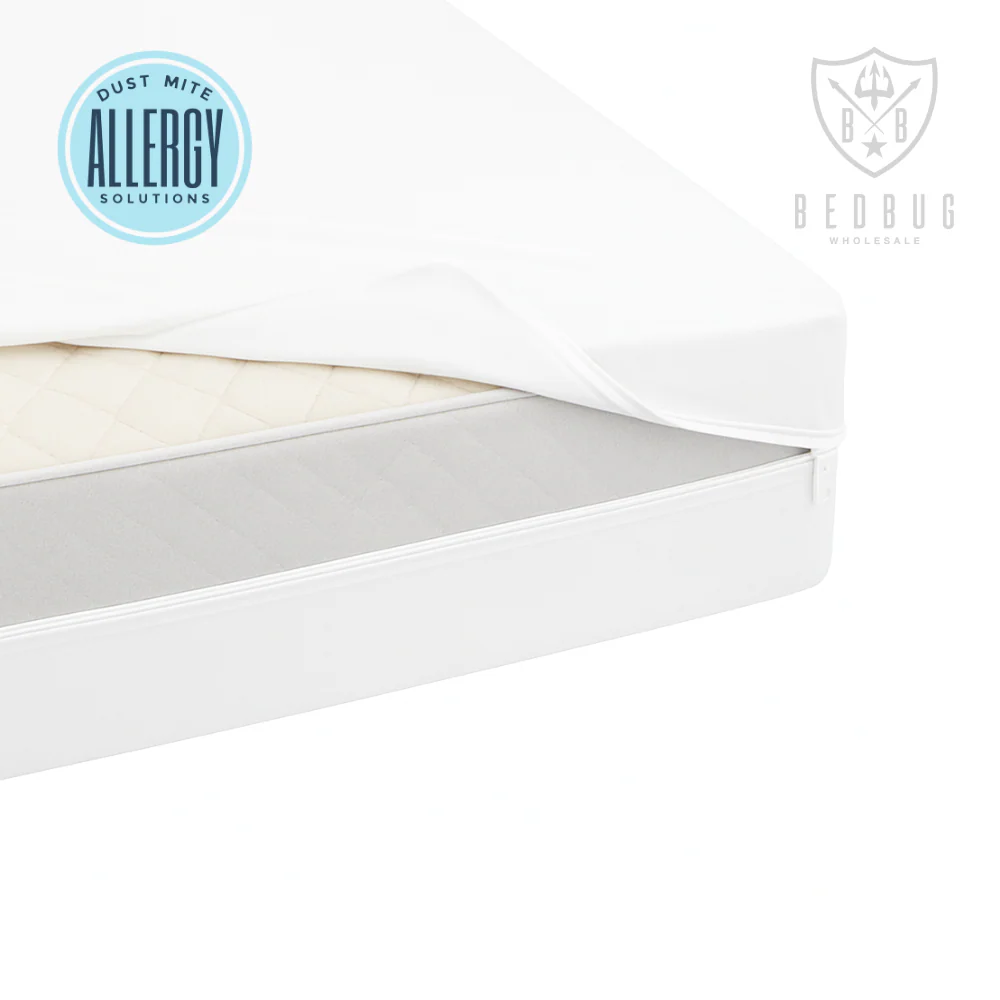
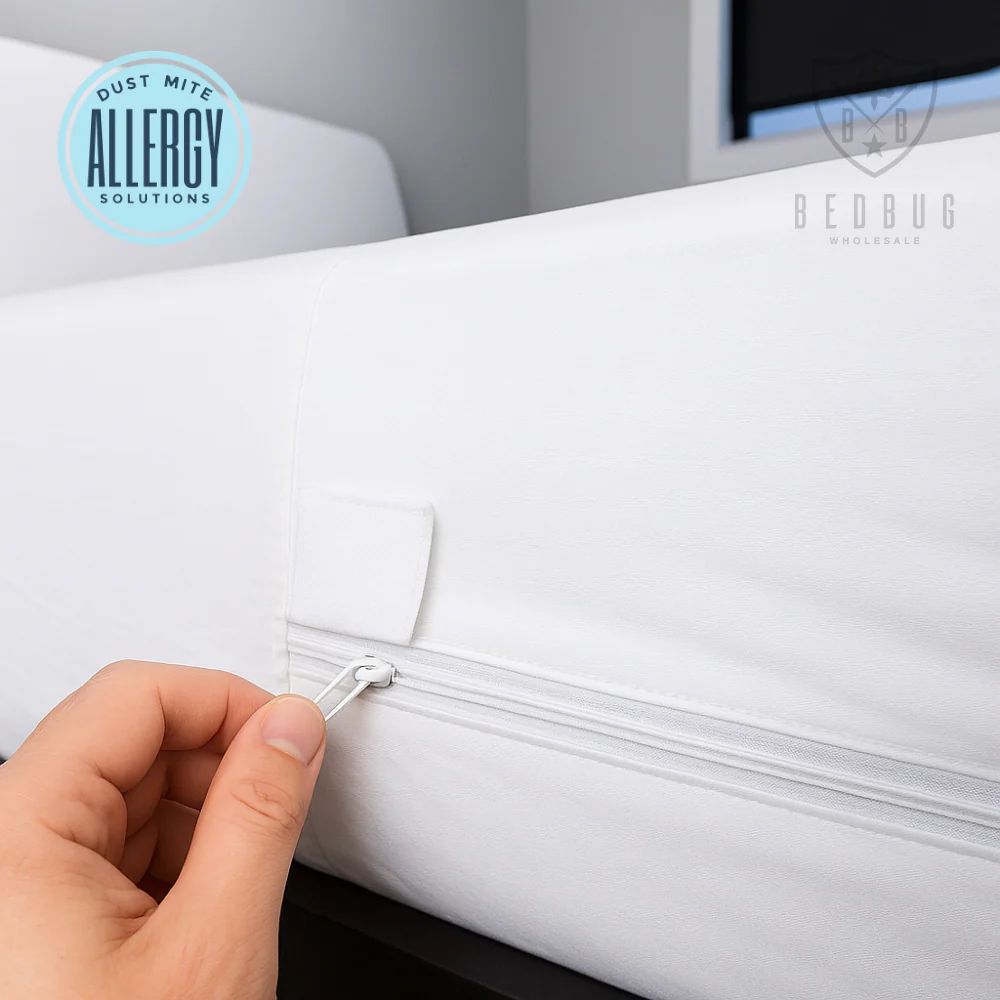
- Velcro-locked zipper — a U-shape zipper sealed by a Velcro flap that stops the zip working open and closes the gap.
- Soft, silent, stretchy — the jersey outer feels like fabric, not plastic (no crinkle) and stretches to fit deep mattresses up to ~36cm.
The pore-size detail (third-party tested)
Dust mite allergens are carried by fecal pellets and body fragments that typically measure 10 to 40 microns. According to test data supplied by the manufacturer, Fifth Ridge Pty Ltd, this fabric’s TPU membrane has pores measured at approximately 0.16 microns at maximum distribution (third-party capillary flow porometry, Galwick fluid) — well below that range, which is why the fabric can be used as a particle barrier. The full zippered closure and enclosed binding seams keep the barrier continuous around all six sides. We have not independently conducted this testing; the figures are reproduced in good faith from the manufacturer.
Materials & specifications
| Fabric outer | 90gsm polyester knitted jersey |
|---|---|
| Lining | 0.2mm microporous TPU (thermoplastic polyurethane) waterproof membrane |
| Pore size | Approximately 0.16 microns at maximum distribution (capillary flow porometry, Galwick fluid). Figures supplied by the manufacturer, Fifth Ridge Pty Ltd, from third-party testing. |
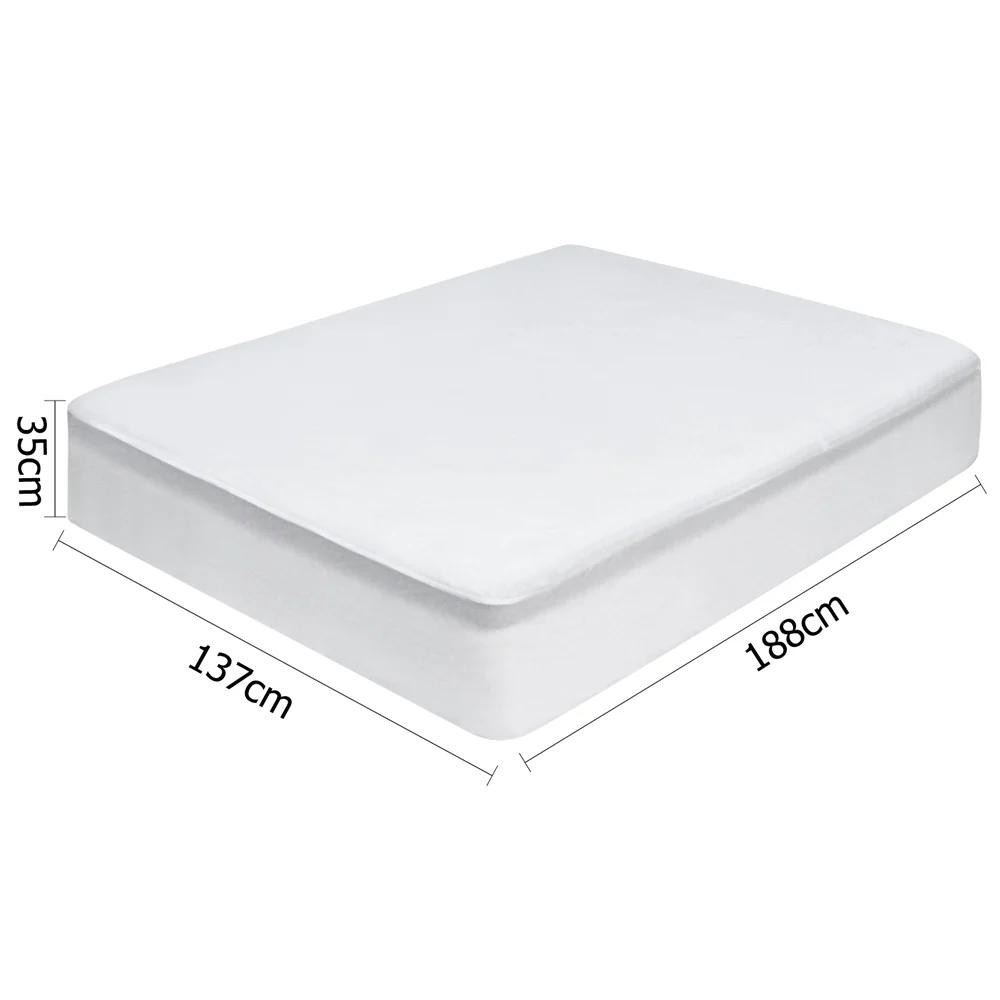
| Depth | Fits mattresses 24–33cm deep (knit stretches to ~36cm) |
| Closure | Three-sided U-shape zipper with Velcro lock flap |
| Waterproof | Yes — TPU membrane blocks liquid spills |
| Warranty | 10-year product warranty (excludes misuse, improper washing, or damage) |
What the research says about mattress encasings
A 2003 randomised controlled trial published in the Journal of Allergy and Clinical Immunology (Halken et al.) tested mattress and pillow encasings against placebo encasings in children with asthma and dust mite allergy. The trial found that the active encasings produced a significant long-term reduction in dust mite allergen concentrations in mattresses over 12 months.
This is a finding of that independent study, reported here for general information. Individual results vary, and this product is intended to be used alongside other dust mite reduction measures.
Who this dust mite mattress protector is for
Best for deeper mattresses (24–33cm) where you want a dust mite barrier and waterproofing in one.
Commonly chosen by
- Anyone building a dust mite barrier across mattress, pillow, and quilt
- Households with deeper mattresses in the 24–33cm range
- Carers and households needing spill protection and an allergen barrier together
Probably not the right fit if
- Your mattress is 24cm or shallower — see our 18–24cm waterproof version
- You prefer 100% natural fibres — see our cotton mattress encasement (OEKO-TEX certified, not waterproof)
Sizing & how to fit it
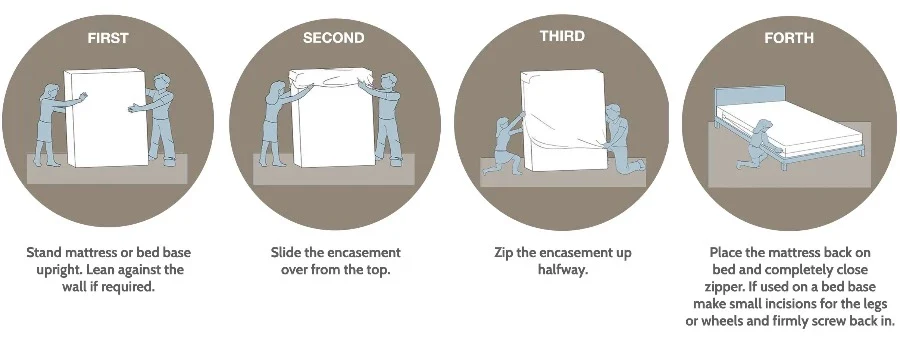
Fits mattresses 24–33cm deep, and the knit stretches to comfortably accommodate up to about 36cm. To fit: stand the mattress on its side, slide the encasement over the top, zip the three sides closed, then seal the Velcro flap.
Choosing the right depth
Measure your mattress depth from the top down to where it rests on the base. Under 22cm, choose the 18–24cm version. Between 22 and 33cm, this version is right. The jersey stretches to about 36cm for very deep mattresses.
Care
Wash before first use, then every 3–6 months — or sooner after a spill. Warm or gentle cycle, do not exceed 60°C. Skip bleach and fabric softeners to protect the TPU membrane.
Full care instructions
- Before first use: wash the encasement before fitting, to remove any production residues (manufacturer-recommended).
- Wash: warm or gentle cycle. Do not exceed 60°C — high heat can damage the TPU membrane over time.
- Dry: tumble dry low/medium or air dry. Avoid very hot dryers, which can break down the TPU lining.
- Frequency: every 3–6 months when a slip-on protector sits on top. Wash sooner after any spill or accident.
- Lifespan: over 4–5 years, body oils can gradually break down the TPU. A top protector significantly extends its life.
- Avoid: bleach, fabric softeners, dry cleaning, ironing, and any oils or strong detergents.
Dust mite mattress protector FAQs
Should I get the 18–24cm or the 24–33cm version?
Measure your mattress depth from the top surface down to where it rests on the base. Under 22cm, choose the 18–24cm version. Between 22 and 33cm, choose this 24–33cm version.
What’s the difference between this and the cotton mattress encasement?
Both can be used as a barrier against dust mite particles. The cotton version is 100% natural cotton, OEKO-TEX certified, more breathable, but not waterproof. This version has a TPU waterproof lining that also blocks liquid spills and has a stretchy fit.
Does it feel like plastic?
No. The TPU membrane is laminated behind a soft polyester knitted jersey, so the surface that touches you is fabric. There’s no plastic crinkle.
Will it make me hot at night?
Less than a fully laminated PVC protector, but slightly more than a 100% cotton encasement. The TPU membrane is microporous — it allows water vapour through, so it breathes — but it’s not as breathable as natural fibre.
Is it suitable for incontinence or bedwetting?
Yes — the TPU lining is fully waterproof. For heavy or repeated wetting, we recommend layering with a washable top protector.
More Images
Waterproof Dust Mite Mattress Protector & Encasement | 24–33cm | AU
Dust mite mattress protector, 24–33cm — waterproof, zippered
A waterproof mattress encasement for deeper mattresses (24–33cm), sealing all six sides to keep dust mite allergens trapped inside and blocking liquid spills.
Your mattress is one of the largest dust mite allergen reservoirs in the home.
The microporous TPU membrane creates a barrier against the fine particles that carry those allergens (typically 10–40 microns), while also being waterproof. A fitted mattress protector goes over the top.
What makes a dust mite mattress protector effective
A microporous TPU membrane with pores measured at around 0.16 microns — far smaller than the 10–40 micron particles that carry dust mite allergens — laminated behind a soft, silent jersey outer and sealed with enclosed binding seams. Pore-size figures are supplied by the manufacturer, Fifth Ridge Pty Ltd, from third-party testing.
- Dust mite allergen barrier — pores well below allergen-particle size, so dust mite waste stays sealed inside the mattress and out of the air you breathe.
- Waterproof TPU barrier — blocks spills, sweat and incontinence; useful for bedwetting, aged care, or households with pets.
- Breathable, not sweaty — the membrane is microporous, letting water vapour through so the encasement still breathes.
- Enclosed binding seams — the fabric edges are sealed inside a bound seam, so the barrier stays continuous along every join.
- Velcro-locked zipper — a U-shape zipper sealed by a Velcro flap that stops the zip working open and closes the gap.
- Soft, silent, stretchy — the jersey outer feels like fabric, not plastic (no crinkle) and stretches to fit deep mattresses up to ~36cm.
The pore-size detail (third-party tested)
Dust mite allergens are carried by fecal pellets and body fragments that typically measure 10 to 40 microns. According to test data supplied by the manufacturer, Fifth Ridge Pty Ltd, this fabric’s TPU membrane has pores measured at approximately 0.16 microns at maximum distribution (third-party capillary flow porometry, Galwick fluid) — well below that range, which is why the fabric can be used as a particle barrier. The full zippered closure and enclosed binding seams keep the barrier continuous around all six sides. We have not independently conducted this testing; the figures are reproduced in good faith from the manufacturer.
Materials & specifications
| Fabric outer | 90gsm polyester knitted jersey |
|---|---|
| Lining | 0.2mm microporous TPU (thermoplastic polyurethane) waterproof membrane |
| Pore size | Approximately 0.16 microns at maximum distribution (capillary flow porometry, Galwick fluid). Figures supplied by the manufacturer, Fifth Ridge Pty Ltd, from third-party testing. |
| Depth | Fits mattresses 24–33cm deep (knit stretches to ~36cm) |
| Closure | Three-sided U-shape zipper with Velcro lock flap |
| Waterproof | Yes — TPU membrane blocks liquid spills |
| Warranty | 10-year product warranty (excludes misuse, improper washing, or damage) |
What the research says about mattress encasings
A 2003 randomised controlled trial published in the Journal of Allergy and Clinical Immunology (Halken et al.) tested mattress and pillow encasings against placebo encasings in children with asthma and dust mite allergy. The trial found that the active encasings produced a significant long-term reduction in dust mite allergen concentrations in mattresses over 12 months.
This is a finding of that independent study, reported here for general information. Individual results vary, and this product is intended to be used alongside other dust mite reduction measures.
Who this dust mite mattress protector is for
Best for deeper mattresses (24–33cm) where you want a dust mite barrier and waterproofing in one.
Commonly chosen by
- Anyone building a dust mite barrier across mattress, pillow, and quilt
- Households with deeper mattresses in the 24–33cm range
- Carers and households needing spill protection and an allergen barrier together
Probably not the right fit if
- Your mattress is 24cm or shallower — see our 18–24cm waterproof version
- You prefer 100% natural fibres — see our cotton mattress encasement (OEKO-TEX certified, not waterproof)
Sizing & how to fit it
Fits mattresses 24–33cm deep, and the knit stretches to comfortably accommodate up to about 36cm. To fit: stand the mattress on its side, slide the encasement over the top, zip the three sides closed, then seal the Velcro flap.
Choosing the right depth
Measure your mattress depth from the top down to where it rests on the base. Under 22cm, choose the 18–24cm version. Between 22 and 33cm, this version is right. The jersey stretches to about 36cm for very deep mattresses.
Care
Wash before first use, then every 3–6 months — or sooner after a spill. Warm or gentle cycle, do not exceed 60°C. Skip bleach and fabric softeners to protect the TPU membrane.
Full care instructions
- Before first use: wash the encasement before fitting, to remove any production residues (manufacturer-recommended).
- Wash: warm or gentle cycle. Do not exceed 60°C — high heat can damage the TPU membrane over time.
- Dry: tumble dry low/medium or air dry. Avoid very hot dryers, which can break down the TPU lining.
- Frequency: every 3–6 months when a slip-on protector sits on top. Wash sooner after any spill or accident.
- Lifespan: over 4–5 years, body oils can gradually break down the TPU. A top protector significantly extends its life.
- Avoid: bleach, fabric softeners, dry cleaning, ironing, and any oils or strong detergents.
Dust mite mattress protector FAQs
Should I get the 18–24cm or the 24–33cm version?
Measure your mattress depth from the top surface down to where it rests on the base. Under 22cm, choose the 18–24cm version. Between 22 and 33cm, choose this 24–33cm version.
What’s the difference between this and the cotton mattress encasement?
Both can be used as a barrier against dust mite particles. The cotton version is 100% natural cotton, OEKO-TEX certified, more breathable, but not waterproof. This version has a TPU waterproof lining that also blocks liquid spills and has a stretchy fit.
Does it feel like plastic?
No. The TPU membrane is laminated behind a soft polyester knitted jersey, so the surface that touches you is fabric. There’s no plastic crinkle.
Will it make me hot at night?
Less than a fully laminated PVC protector, but slightly more than a 100% cotton encasement. The TPU membrane is microporous — it allows water vapour through, so it breathes — but it’s not as breathable as natural fibre.
Is it suitable for incontinence or bedwetting?
Yes — the TPU lining is fully waterproof. For heavy or repeated wetting, we recommend layering with a washable top protector.
Product Information
Product Information
Shipping & Returns
Shipping & Returns
Description
Dust mite mattress protector, 24–33cm — waterproof, zippered
A waterproof mattress encasement for deeper mattresses (24–33cm), sealing all six sides to keep dust mite allergens trapped inside and blocking liquid spills.
Your mattress is one of the largest dust mite allergen reservoirs in the home.
The microporous TPU membrane creates a barrier against the fine particles that carry those allergens (typically 10–40 microns), while also being waterproof. A fitted mattress protector goes over the top.
What makes a dust mite mattress protector effective
A microporous TPU membrane with pores measured at around 0.16 microns — far smaller than the 10–40 micron particles that carry dust mite allergens — laminated behind a soft, silent jersey outer and sealed with enclosed binding seams. Pore-size figures are supplied by the manufacturer, Fifth Ridge Pty Ltd, from third-party testing.
- Dust mite allergen barrier — pores well below allergen-particle size, so dust mite waste stays sealed inside the mattress and out of the air you breathe.
- Waterproof TPU barrier — blocks spills, sweat and incontinence; useful for bedwetting, aged care, or households with pets.
- Breathable, not sweaty — the membrane is microporous, letting water vapour through so the encasement still breathes.
- Enclosed binding seams — the fabric edges are sealed inside a bound seam, so the barrier stays continuous along every join.
- Velcro-locked zipper — a U-shape zipper sealed by a Velcro flap that stops the zip working open and closes the gap.
- Soft, silent, stretchy — the jersey outer feels like fabric, not plastic (no crinkle) and stretches to fit deep mattresses up to ~36cm.
The pore-size detail (third-party tested)
Dust mite allergens are carried by fecal pellets and body fragments that typically measure 10 to 40 microns. According to test data supplied by the manufacturer, Fifth Ridge Pty Ltd, this fabric’s TPU membrane has pores measured at approximately 0.16 microns at maximum distribution (third-party capillary flow porometry, Galwick fluid) — well below that range, which is why the fabric can be used as a particle barrier. The full zippered closure and enclosed binding seams keep the barrier continuous around all six sides. We have not independently conducted this testing; the figures are reproduced in good faith from the manufacturer.
Materials & specifications
| Fabric outer | 90gsm polyester knitted jersey |
|---|---|
| Lining | 0.2mm microporous TPU (thermoplastic polyurethane) waterproof membrane |
| Pore size | Approximately 0.16 microns at maximum distribution (capillary flow porometry, Galwick fluid). Figures supplied by the manufacturer, Fifth Ridge Pty Ltd, from third-party testing. |
| Depth | Fits mattresses 24–33cm deep (knit stretches to ~36cm) |
| Closure | Three-sided U-shape zipper with Velcro lock flap |
| Waterproof | Yes — TPU membrane blocks liquid spills |
| Warranty | 10-year product warranty (excludes misuse, improper washing, or damage) |
What the research says about mattress encasings
A 2003 randomised controlled trial published in the Journal of Allergy and Clinical Immunology (Halken et al.) tested mattress and pillow encasings against placebo encasings in children with asthma and dust mite allergy. The trial found that the active encasings produced a significant long-term reduction in dust mite allergen concentrations in mattresses over 12 months.
This is a finding of that independent study, reported here for general information. Individual results vary, and this product is intended to be used alongside other dust mite reduction measures.
Who this dust mite mattress protector is for
Best for deeper mattresses (24–33cm) where you want a dust mite barrier and waterproofing in one.
Commonly chosen by
- Anyone building a dust mite barrier across mattress, pillow, and quilt
- Households with deeper mattresses in the 24–33cm range
- Carers and households needing spill protection and an allergen barrier together
Probably not the right fit if
- Your mattress is 24cm or shallower — see our 18–24cm waterproof version
- You prefer 100% natural fibres — see our cotton mattress encasement (OEKO-TEX certified, not waterproof)
Sizing & how to fit it
Fits mattresses 24–33cm deep, and the knit stretches to comfortably accommodate up to about 36cm. To fit: stand the mattress on its side, slide the encasement over the top, zip the three sides closed, then seal the Velcro flap.
Choosing the right depth
Measure your mattress depth from the top down to where it rests on the base. Under 22cm, choose the 18–24cm version. Between 22 and 33cm, this version is right. The jersey stretches to about 36cm for very deep mattresses.
Care
Wash before first use, then every 3–6 months — or sooner after a spill. Warm or gentle cycle, do not exceed 60°C. Skip bleach and fabric softeners to protect the TPU membrane.
Full care instructions
- Before first use: wash the encasement before fitting, to remove any production residues (manufacturer-recommended).
- Wash: warm or gentle cycle. Do not exceed 60°C — high heat can damage the TPU membrane over time.
- Dry: tumble dry low/medium or air dry. Avoid very hot dryers, which can break down the TPU lining.
- Frequency: every 3–6 months when a slip-on protector sits on top. Wash sooner after any spill or accident.
- Lifespan: over 4–5 years, body oils can gradually break down the TPU. A top protector significantly extends its life.
- Avoid: bleach, fabric softeners, dry cleaning, ironing, and any oils or strong detergents.
Dust mite mattress protector FAQs
Should I get the 18–24cm or the 24–33cm version?
Measure your mattress depth from the top surface down to where it rests on the base. Under 22cm, choose the 18–24cm version. Between 22 and 33cm, choose this 24–33cm version.
What’s the difference between this and the cotton mattress encasement?
Both can be used as a barrier against dust mite particles. The cotton version is 100% natural cotton, OEKO-TEX certified, more breathable, but not waterproof. This version has a TPU waterproof lining that also blocks liquid spills and has a stretchy fit.
Does it feel like plastic?
No. The TPU membrane is laminated behind a soft polyester knitted jersey, so the surface that touches you is fabric. There’s no plastic crinkle.
Will it make me hot at night?
Less than a fully laminated PVC protector, but slightly more than a 100% cotton encasement. The TPU membrane is microporous — it allows water vapour through, so it breathes — but it’s not as breathable as natural fibre.
Is it suitable for incontinence or bedwetting?
Yes — the TPU lining is fully waterproof. For heavy or repeated wetting, we recommend layering with a washable top protector.